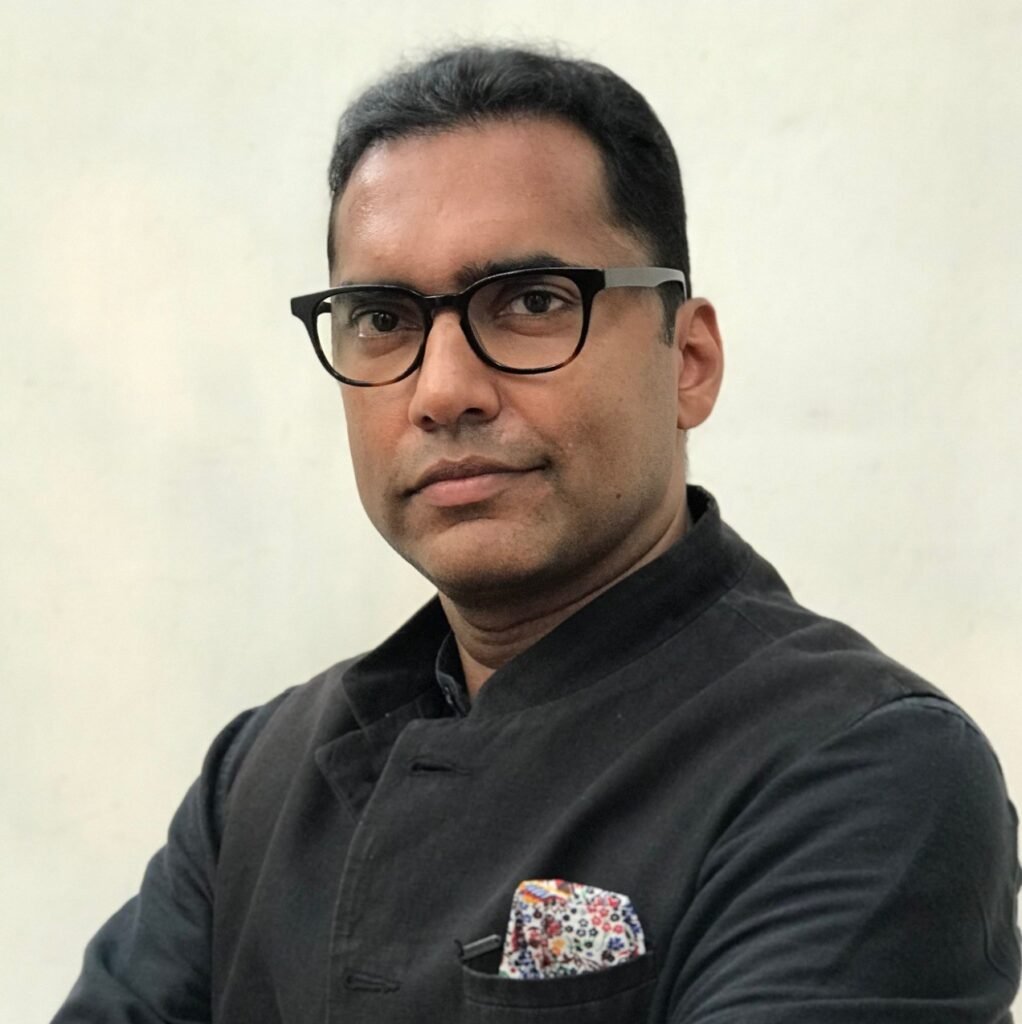
Dr Avtar Singh Bhasin was a historian, scholar, and author who devoted his life to documenting the documentary history of India’s foreign policy. Over the course of his long career, he quietly reshaped the field of diplomatic studies in India through the meticulous compilation and publication of one of the most substantial bodies of primary material on the country’s post-independence external relations. He passed away in January 2026 at the age of 90.
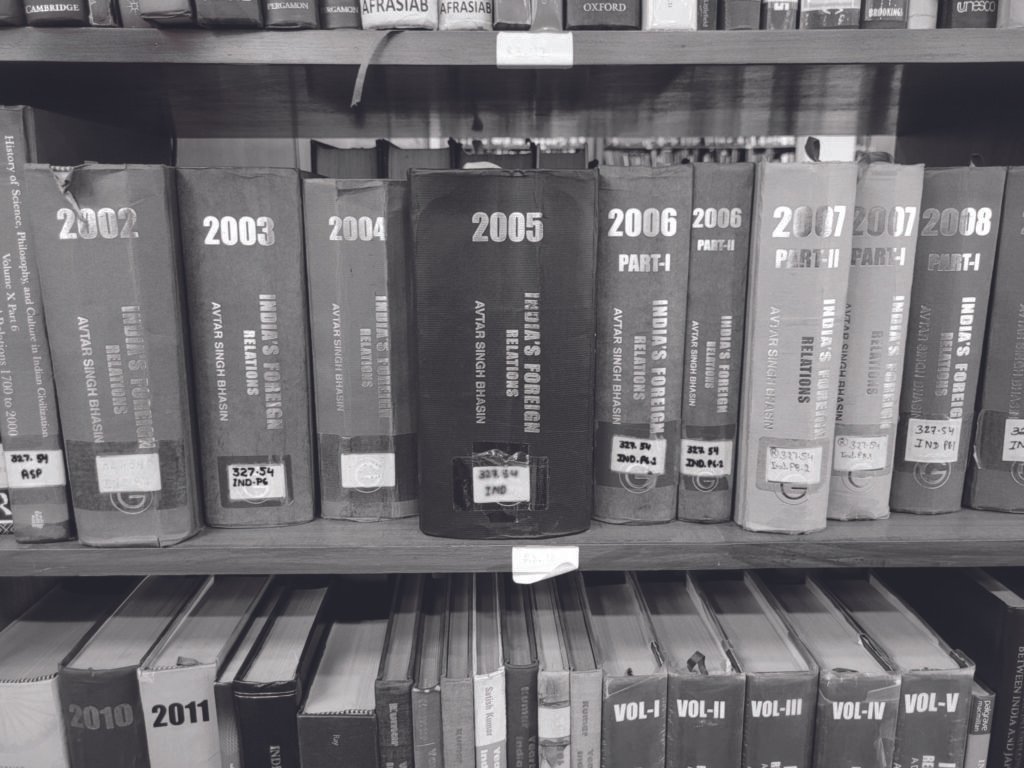
A historian by training, Dr Bhasin joined the Historical Division of the Ministry of External Affairs in 1963. He served there for three decades until his retirement in 1993 and was posted to Indian Missions in Kathmandu, Bonn, Vienna, and Lagos. After his retirement, Dr Bhasin undertook what became his life’s defining mission: systematically collecting, editing, and publishing official documents relating to India’s relations with its principal neighbours. Over three decades, he produced more than thirty volumes, including the monumental ten-volume series on India–Pakistan relations and the five-volume compilation on India–China ties. Between 2002 and 2013, he also edited the annual India’s Foreign Relations volumes, assembling key documents in the public domain.
Dr Bhasin located records in official archives and private collections, wrote introductions and annotations, and oversaw publication himself — functioning at once as researcher, editor, and publisher. At a time when declassification in India has been uneven, his work offered scholars an indispensable documentary foundation. In a final act of generosity, he digitised his volumes and made them freely accessible online.
His documentary legacy will endure as a lasting resource for the study of India’s diplomacy.
What follows are tributes from colleagues and friends who knew him as a diplomat, historian, and mentor.
Shivshanker Menon
Avtar Singh Bhasin was unique in many respects. He not only produced a remarkable body of work, collecting, publishing and commenting on documents covering India’s relations with her neighbours, but he then chose to make the fruits of his labour available freely to scholars around the world by digitising them and putting them online. His work is especially valuable as a record and resource for scholars when, despite the law and its 30-year rule, the declassification of official documents in India is so patchy, erratic and unpredictable.
That Bhasin was able to produce such a vast body of work was in itself remarkable and is a tribute to his dedication and application to the task. Equally remarkable was how lightly he carried the weight of his prodigious scholarship. He never let it interfere with his humanity. His kindness to other scholars is legendary. His was the historian’s credo: to follow the evidence wherever it led. On the rare occasions when he did not, and one reminded him of it, he was willing to reconsider his assumptions and to admit the possibility that his opinions were only one among many, and not necessarily always entirely right. This was remarkable humility in a person of such accomplishment.
Bhasin will be missed not only by the scholarly community but by the wider circle of friends he leaves behind. The best tribute to him would be the institution of a system for the regular publication and release of official documents relating to Indian foreign policy.
Shivshankar Menon
Former Foreign Secretary of India
Kishan S Rana
The demise of Avatar Singh Bhasin (ASB) on February, at the age of 90, leaves us bereft of a man of unique humility, integrity and public service. His career in the Ministry of External Affairs as Director of the Historical Division at his apex, is matched by his equally long post-retirement work, in the following 33 years. He became India’s foremost archivist of foreign affairs documents. He was also our ‘bestie’, for Shiv Malik, my wife Mimi and I. We called ourselves ‘IIC Gang of Four’.
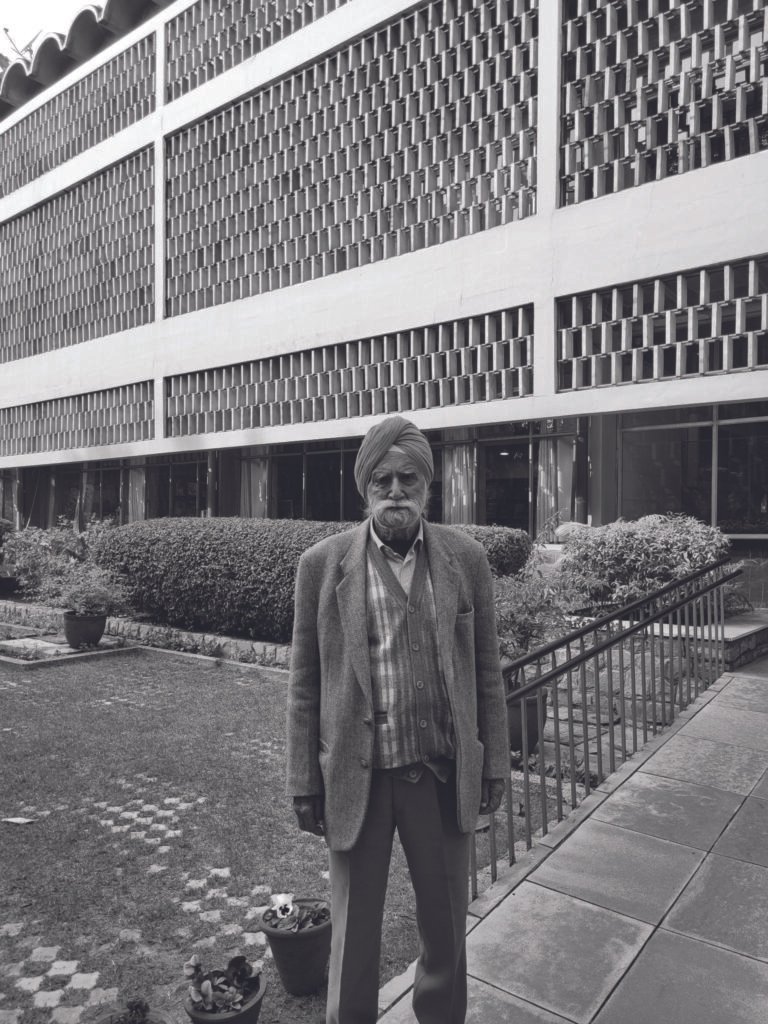
A few vignettes. At MEA, we worked together in the Northern Division (1973-75), ASB handling Nepal and Tibet affairs, also MEA’s interface for the Dalai Lama’s establishment at Dharamsala; I was a supervisor that learnt from him. Later, in the 1980’s, he handled MEA’s government properties around the world. That called for delicacy; typically, ambassadors are solicitous of their sarkari residences and offices. When displeased, they may complain to the Foreign Secretary or one of his senior colleagues. ASB tackled that with easy grace.
In Germany (1978-82), the initial years were under Ambassador MA Rahman, a particularly generous man, who encouraged his officials to be proactive, even handle new opportunities independently, if needed. ASB handled cultural and media activities, with splendid results. Posted later to Nigeria, he adjusted to the African ethos, the brusque, abrupt behaviour of his interlocutors. Rather few look that behind that; Africans value human connections, responding to sincerity. ASB saw Lagos as his best assignments. His patient, cool temper served him throughout his working career, and even more post-MEA.
He then went back to his professional roots, a natural fit. MEA had neglected compilation/publication of full sets of official documents. ASB saw this and produced ‘Yearbooks’ for MEA, selectively covering key documents of that particular year. He then covered past years. That morphed into a bigger task, country-specific post-Independence materiel, covering on all neighbouring countries. He was on to a ‘silver mine’, if not a gold mine! A few years back, he opened all these collections for free download at www.asbhasin.com
This involved exceptionally hard labour, wading through masses of files; no one had done this earlier. MEA was delighted, and he was supported by a succession of Foreign Secretaries, MEA seniors, and Ambassadors. Example: they gave him access to all India-Pakistan classified papers. The net result: a unique 10-volume compilation of those exchanges, covering everything of importance since 1947 in the fraught relationship – internal reports, cipher telegrams, even select notes from MEA files. The 5-volume India-China collection is more limited, covering almost everything from pre-1947 to 1962, but stops there, as MEA has not released papers of later years.
In sum, ASB’s humour, kindness and friendships struck all who encountered him, like his 1000 to 1700 daily presence at India International Centre Library, are legend. His integrity and determination are inspiring. ASB died with his boots on.
Kishan S Rana
Former ambassador, teacher, author
Ashok K. Kantha
Avtar Singh Bhasin’s passing leaves a big void in the community of scholars who study India’s neighbourhood. I knew Bhasin Saheb, as I called him, for many decades; he was a friend and an indefatigable archivist and scholar whose work quietly reshaped how we understand India’s diplomacy. His multivolume documentary studies on India’s relations with China, Nepal, Sri Lanka and Pakistan were masterpieces of patient scholarship: he tracked down classified files, negotiated access to PN Haksar papers and other restricted collections, and assembled documents that would otherwise have remained scattered or unseen.
Those volumes, as also his annual documentary series published by the Ministry of External Affairs, India’s Foreign Relations (2002–2013), were a veritable treasure trove of essential archival material for academics and practitioners alike; their introductions, annotations and chronologies turned raw records into usable history.
He combined exacting standards with a humility that made him approachable. He loved a good, friendly argument over lunch or tea at the India International Centre, and his dry, disarming humour could brighten the most tedious archival slog. After his wife’s death, the IIC and the Nehru Memorial Library became his second home, and in retirement, he produced most of his prolific writings, including his latest book, Negotiating India’s Landmark Agreements. He chose to place most of his work online free of paywalls so that researchers everywhere could benefit — a generous act that speaks to his belief that knowledge should be shared. He was still planning new projects in his early nineties. We have lost a scholar of rare erudition, integrity and warmth; his documentary studies in particular will remain an indispensable source material for generations of scholars.
Ashok K. Kantha
Former diplomat, Subhas Chandra Bose Chair Professor of International Relations at Chanakya University
T C A Raghavan
Avatar Singh Bhasin’s death at 90 on 25th January 2026 meant the closing of the innings of an indefatigable chronicler of India’s post-independence diplomacy and foreign policy. He had to his credit a multivolume compilation of documents pertaining to India’s principal neighbourhood relationships- China, Pakistan, Bangladesh, Nepal and ASEAN. The pride of place in these belongs to the five-volume India-China compilation and a staggering ten volumes of documents on India-Pakistan relations. In addition, between 2002 and 2013, he brought out an annual volume of documents on Indian foreign policy- in the main collecting the principal official documentation in the public domain on foreign policy.
Put together these 30-odd volumes comprise a massive archive of primary documentation running into some 50,000 printed pages. What was extraordinary was that this was an individual effort- Bhasin worked alone, beginning from the stage of locating and extracting documents from the records room of the Ministry of External Affairs, the National Archives and from different private collections and depositories, to their compilation, editing, proofreading and final printing. He acted thus as a combined researcher, editor and publisher.
This deep grounding in the primary archive of the Ministry of External Affairs also led to Bhasin authoring over the past decade a number of well-received secondary works on India- Pakistan and India- Sri Lanka relations, and on Tibet and China. His latest book, titled Negotiating India’s Landmark Agreements, appeared in 2024 and was published by Penguin Random House. So, alongside his multiple roles as archivist, researcher and compiler, Bhasin was also a historian of Indian diplomacy and often also a commentator on current foreign policy issues.
A student of history at the graduate and postgraduate level, Bhasin joined the then Historical Division of the Ministry of External Affairs in 1963. He clearly internalised the importance of such an institution for a modern foreign office. This was to such an extent that after his retirement in 1993, he set out to single-handedly discharge what was one of the erstwhile Historical Division’s core original functions- to provide a historical perspective to current foreign policy challenges.
By the late 1980s, the Historical Division no longer existed in the MEA, and this made Bhasin’s endeavours to convince the MEA to declassify and put into the public domain documents on sensitive bilateral relationships, an even more uphill task. It is a measure of his dedication and persistence that he published multiple volumes of government documents on some of modern India’s most tangled and conflicted bilateral relationships. In addition to what he published, Bhasin’s efforts have also meant that a wider scholarly fraternity has been made aware of the wealth value of the archival record of the Ministry of External Affairs.
While it is commonplace to speak of an ‘archival turn’ in the study of modern India’s diplomatic engagements over the past two decades, this ‘turn’ owes much to the efforts of Avatar Singh Bhasin and scholars of diplomatic history will be forever indebted to his stupendous efforts.
On a personal note, I had the good fortune to come to know Shri Bhasin well after meeting him first about twenty-five years ago. He had other distinctive qualities that endeared him to many: An old-world attitude of great charm and courtesy, an eagerness to help other scholars and a deep generosity in sharing the results of his own research.
T C A Raghavan
Former High Commissioner of India to Pakistan
Manjeev Singh Puri
Over the years, India’s Foreign Ministry has produced many writers and scholars but, perhaps, none have seen a foreign ministry of another country wanting a copy of their work for its library. This rare honour was Bhasin Sahib’s, the chronicler of India’s foreign policy since Independence. His publication on “Nepal-India, Nepal-China 1947-2005” was sought by the Nepalese for their library in Kathmandu and their Embassy in New Delhi.
This scholarly work brought together all the relevant documents pertaining to the two most critical ties for Nepal over a fifty-year period and provided them with a ready reference. For India, too, it was an important source for understanding Nepal’s ties with its northern neighbour and their implications to the south. As India’s Ambassador in Kathmandu, I couldn’t have been more proud to receive the request for this publication from the Nepalese. Sourcing the 2006 publication more than ten years after it came out wasn’t easy, but fortunately, I knew Bhasin Sahib.
My friendship with Bhasin Sahib and his mentorship of my curiosity in India’s diplomatic histories went back to 2003, when I was posted in Muscat and ‘discovered’ that independent India’s diplomatic presence in Oman went back to 1953. I was eager to document this, but really had no idea where one could source original papers. And then, on a visit to Delhi, I met Bhasin Sahib at the India International Centre and was guided by him to the National Archives and introduced to its senior archivist, Tassadaque Hussain. A treasure was waiting to be discovered, including the original correspondence between the British Indian government and the Sultan of Oman and much more that led to a lovely publication and exhibition hosted on India-Oman ties put together by the Embassy in Muscat. It was inaugurated by His Highness Said Haitham, now the Sultan of Oman.
A decade later, I found myself in Brussels. Our celebration of 70 years of Independence once again triggered my curiosity on the history of India–Belgium ties and, indeed, India’s relations with the European Union. Now, Bhasin Sahib was my natural go-to. He asked me if I knew Lyala Tyabji, whose father started India’s mission in Brussels in 1948 itself! He also found for me the autobiography of Ambassador GJ Mallik, who was the first Indian diplomat in Brussels. These leads resulted in two publications—one covering India’s ties with Belgium and Luxembourg and another with the European Union. I also learnt that Belgium was the first West European country to post an Ambassador in New Delhi after India’s Independence.
Bhasin Sahib’s help and friendship continued. He helped again in reaching out to the National Archives for bringing out a publication tracing India’s diplomatic ties with Nepal and reproducing the signed original of the foundational India-Nepal Treaty of 1951. And, just a year back, he was my source for an article on Sikhs in Indian diplomacy published in the venerable Sikh Review, brought out from Kolkata.
I last saw Bhasin Sahib just before the New Year 2026, of course, at the IIC, his hangout for nearly 40 years. He told me that he had a manuscript on the division of Punjab in the works – knowing the likely bent that his work would take, I did what I always did in such conversations with him – bantered. The world view that he now held and mine on key formative aspects of our foreign policy differed, and we argued. Indeed, on one occasion, on the dining table in India House in Kathmandu, I was glad that I had Puneet, his daughter, on my side, making it 2–1!
You will be sorely missed, Bhasin Sahib, not only by the IIC crowd but by me personally. I benefited so much through your affection and willingness to banter with me, disagree and laugh.
Manjeev Singh Puri
Former Ambassador of India to Nepal
Gyanesh Kudaisya
In the passing away of Dr Avtar Singh Bhasin on 25 January 2026, the world of scholarship on South Asian diplomacy has lost a meticulous and prolific historian and a highly creative and impactful archivist.
I first met Dr Bhasin in 1993, when he had just joined the Centre for Contemporary Studies at the Nehru Memorial Museum & Library (now renamed the PMML) as an affiliated Senior Fellow of the Indian Council of Historical Research. I was then a Junior Fellow at the Centre, which was headed by the distinguished historian Professor Ravinder Kumar and boasted a stellar cast of academics, former civil servants and policy researchers. Dr Bhasin stood out for his friendly and accessible manner and his warmth towards younger scholars, disregarding differences of age and status. Having recently retired from the MEA, he was taking the early steps towards embarking on what would become his magnificent second career as a historian, archivist, publisher and interlocutor of Indian diplomacy. He had recently published Some Called it Partition, Some Freedom, an insightful and vivid account of the 75 days preceding the August 1947 division. We bonded because of our shared interest in the history of Partition.
Unconstrained by the formality associated with his background in diplomacy, Dr Bhasin strove to be an independent scholar — open-minded, driven by curiosity and passion. Behind his cheerful demeanour and relaxed manner, however, was a disciplined, ambitious and highly motivated researcher.
In the years that followed, Dr Bhasin built a robust partnership with the Public Diplomacy Division of the Ministry of External Affairs (MEA) by publishing, from 2002 onwards, an annual compendium of India’s Foreign Relations, showcasing documents bearing on India’s foreign relations in the year under review. Each volume contained a scholarly introduction that gave at length India’s engagement with different regions and countries and provided an invaluable context for the documents that followed. The annual editions of India’s Foreign Relations were edited, published and printed to high editorial and production standards. To us historians, the series brought together the best features of the classic N. N. Mitra’s Indian Annual Register: a Digest of Public Affairs of India (1919–1947) as well as Keesing’s Contemporary Archives.
This partnership with the MEA, built on professionalism and trust, persuaded the top echelons of the Ministry to agree to the multi-volume works which Dr Bhasin edited over the subsequent two decades. These include India’s Relations with Sri Lanka, Bangladesh and Nepal (five volumes each), a ten-volume documentary study on Pakistan and, not least, India-China Relations 1947 (five volumes). His recently authored books include Nehru, Tibet and China (2021) and Negotiating India’s Landmark Agreements (2024), both of which have received critical acclaim.
Through his efforts, Dr Bhasin succeeded in bringing into the public domain thousands of pages of archival material relating to India’s international relations with its neighbours, which might otherwise have remained inaccessible. He also responded to the need for India to engage in robust public diplomacy. He astutely wrote in his 2011 edition of India’s Foreign Relations: ‘Public discourse on foreign relations today takes place as much in the drawing rooms of the elite as in the chaupals of villages across the country. The newspapers satisfy the needs of the curious and the sundry. But for the intellectuals and the professionals … scientific study requires the availability of the full text of documents.’ Perhaps he also anticipated the “archival turn” that the study of international relations has taken. Not least, he understood that young entrants joining the Indian Foreign Service needed historical depth in their training to be able to engage with fast-changing geopolitical realities. His legacy in this respect remains monumental.
Gyanesh Kudaisya
Associate Professor of South Asian Studies, National University of Singapore


1-1024x768.jpg)