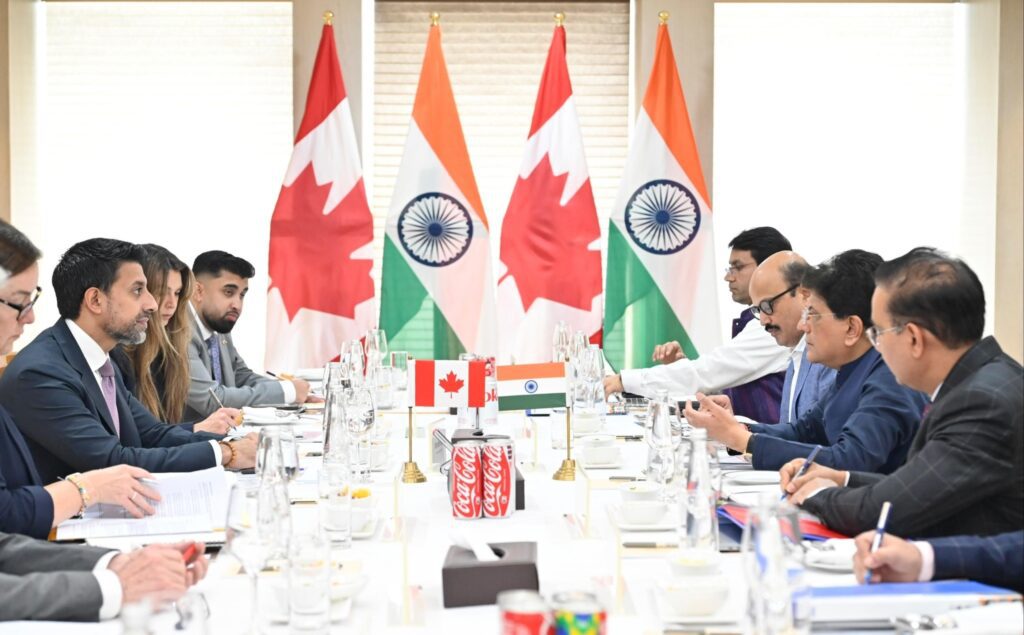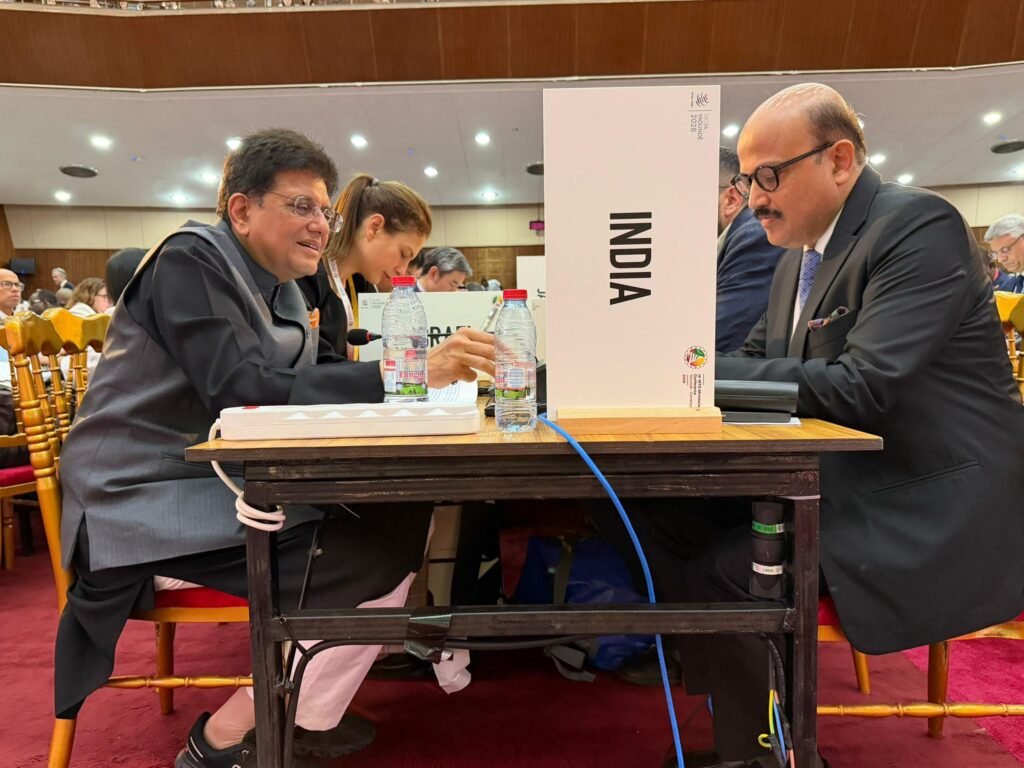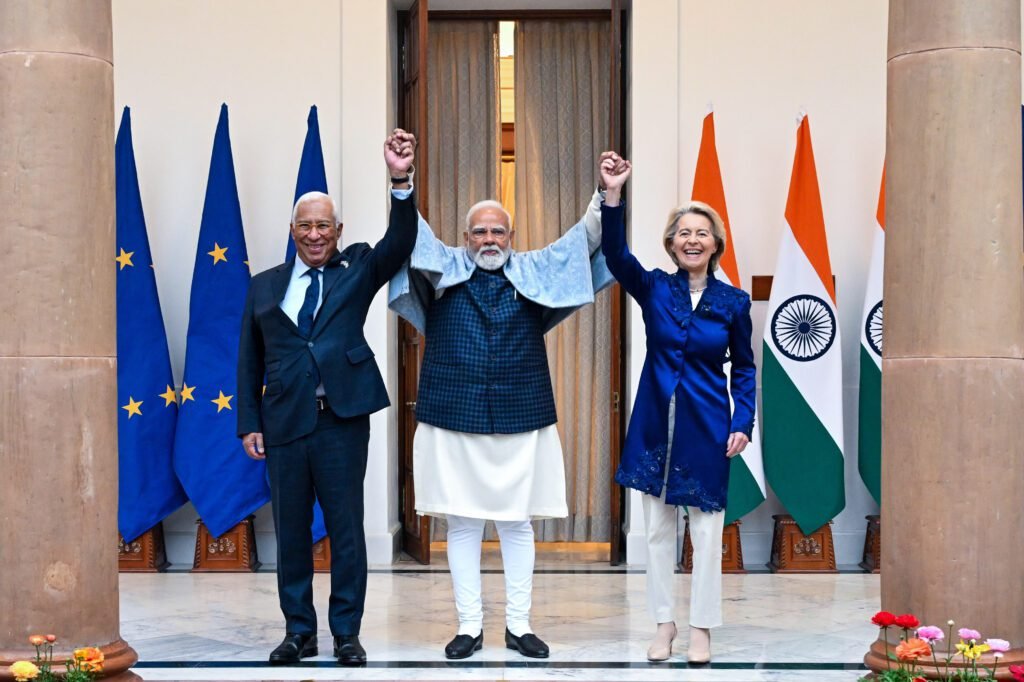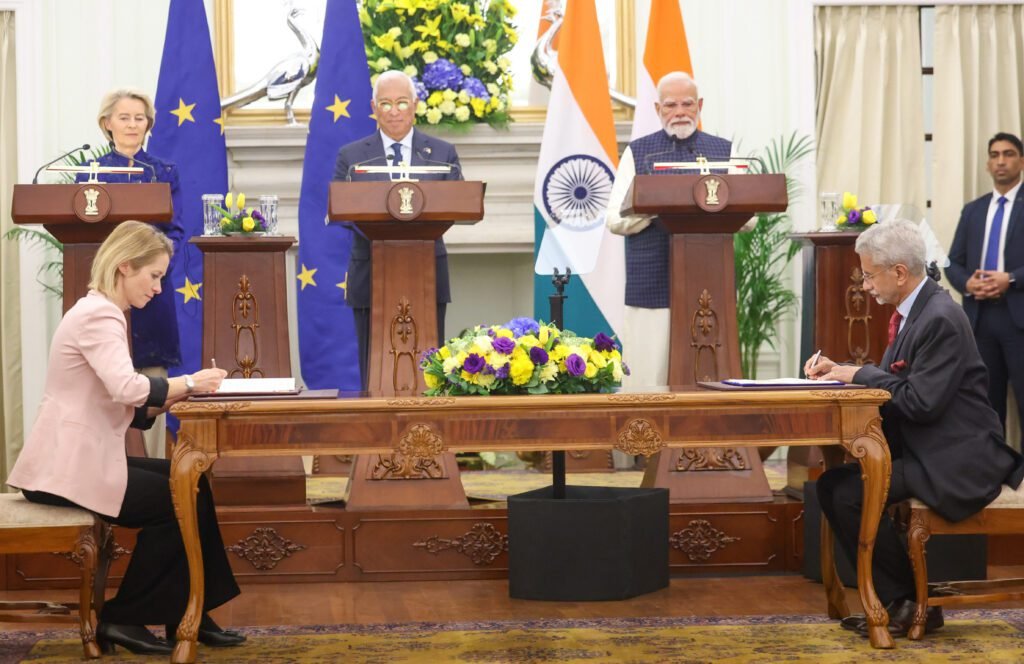
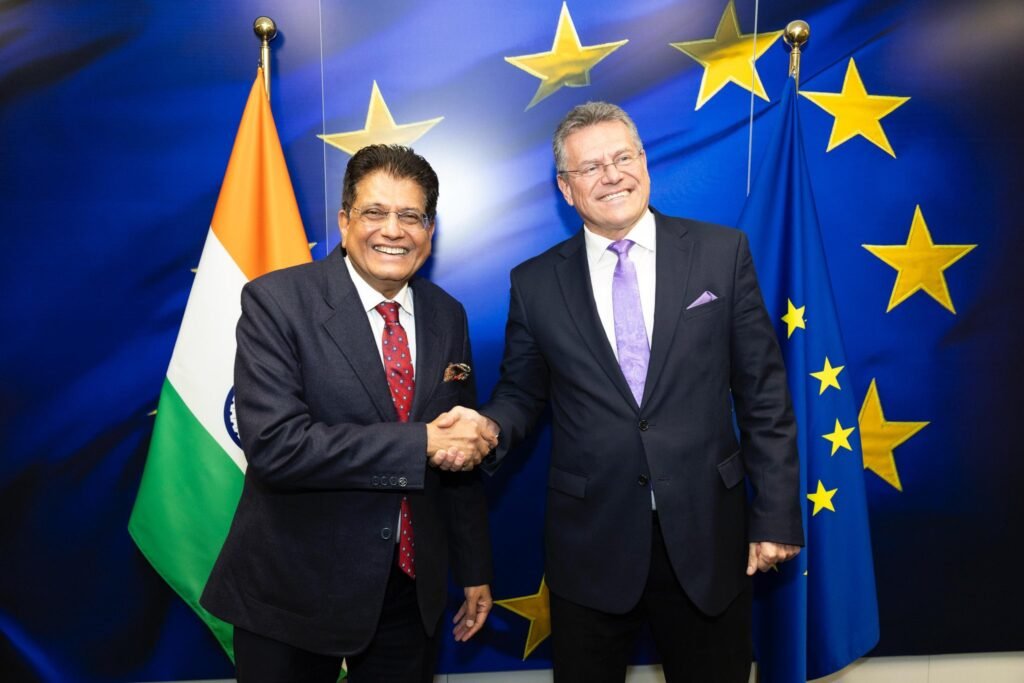
As India’s Union Commerce and Industry Minister Piyush Goyal heads to Brussels on January 8–9 to push toward closure of the long-pending India–European Union Free Trade Agreement (FTA), the negotiations have entered their most decisive and challenging phase. Both sides are now focused on resolving the most contentious issues, especially the European Union’s Carbon Border Adjustment Mechanism (CBAM) under which exports of select industrial goods to the EU will be charged a carbon price. The visit is expected to give much-needed impetus towards the conclusion of FTA talks as India prepares to host Ursula von der Leyen and António Costa as chief guests for Republic Day on January 26, 2026.
India-EU FTA Talks: The story so far
The talks were first formally launched in 2007 but stalled in 2013. They were ambitiously re-launched in June 2022 after a hiatus of over nine years. Since then, both sides have held 14 rounds of intense negotiations and several high-level ministerial dialogues, with the latest interaction taking place in December 2025, against the backdrop of global supply-chain disruptions caused by heightened geopolitical volatility.
Despite high expectations and sustained high-level political engagement, both sides failed to conclude the negotiations by the end of 2025, as talks stumbled over the key issue of climate-linked trade measures. At the centre of the impasse is the EU’s CBAM regime, which has emerged as the most contentious issue, eclipsing the tariff reductions and market-access gains that were originally expected to anchor a final deal.
What is the Carbon Border Adjustment Mechanism (CBAM)?
The European Union’s Carbon Border Adjustment Mechanism (CBAM) is a new policy instrument that places a carbon charge on imports into the EU from six carbon-intensive industrial sectors: cement, iron and steel, aluminium, fertilisers, electricity, and hydrogen. Put simply, it “is a fee or tariff levied on imported goods based on the greenhouse gases emitted during their production.”
By imposing CBAM as a regulatory instrument, the EU seeks to address the risk of “carbon leakage,” which is referred to as the “shifting of the production of goods to non-EU countries where there is a lower or no carbon cost associated with their production.”
CBAM was legally established under Regulation (EU) 2023/956 of 10 May 2023. It applies to designated CBAM goods imported into the EU from third countries and forms part of the EU’s broader “Fit for 55” climate package. Its core objective is to ensure that the prices of certain imported goods more accurately reflect their carbon content, while simultaneously seeking to encourage foreign producers and trading partners to reduce emissions.”
For regulatory purposes, “imports” refer to all goods entering the EU from non-EU countries. The scope of CBAM is defined in Annexe I of the regulation using the EU’s “Combined Nomenclature” (CN) codes, the standardised classification system for goods in international trade. The covered sectors currently include iron and steel, fertilisers, aluminium, cement, hydrogen, and electricity.
CBAM between climate ambition and development needs
For India, CBAM is widely viewed as a non-tariff barrier that risks eroding export competitiveness in carbon-intensive sectors such as steel, aluminium and cement, while constraining industrial growth at a stage when large parts of the economy remain dependent on coal. Indian exporters face higher compliance costs, pricing pressure from EU buyers, and the prospect of margin erosion even before formal carbon payments begin.
For Indian exporters, CBAM poses a serious challenge, and the implications could be significant. For instance, much of India’s heavy industry remains coal-dependent, with coal accounting for close to 46% of total energy use. According to an analysis by the Centre for Science and Environment (CSE), “CBAM could impose substantial cost pressures on steel and aluminium exports to the EU [and the] affected exports could face a price burden of around 25 per cent — a shock that exporters are likely to absorb through price compression in order to remain competitive.”
Once the CBAM mechanism is fully implemented, carbon costs will be factored into commercial negotiations with EU buyers from the outset, raising operating and compliance costs for Indian firms. Indian officials have criticised the mechanism as an “arbitrary trade barrier” disguised as climate action, arguing that it imposes additional costs on producers of developing countries.
In February 2025, during the second meeting of the India-EU Trade and Technology Council, the EU acknowledged India’s concerns on CBAM implementation. The joint statement noted that “[b]oth sides have held in-depth discussions on trade and decarbonization through several bilateral channels and have engaged jointly with stakeholders, especially on the implementation of the EU’s carbon border mechanism (CBAM). Both sides discussed the challenges arising out of CBAM implementation, in particular for the small and medium enterprises and agreed to continue addressing them.”
Beyond the bilateral setting, the EU’s climate-linked trade measures have been criticised by emerging and developing economies at UN climate forums, where concerns persist that such trade-related carbon measures pose a risk to economic growth in countries having limited capacity towards absorbing such compliance costs for their exports into the EU.
Why the EU is unlikely to retreat
From the EU perspective, CBAM is explicitly linked to the EU Emissions Trading System (EU ETS) in both its purpose and pricing design. CBAM is intended to equalise carbon costs between imports and EU domestic production under the ETS so that foreign producers do not gain a competitive advantage from weaker climate policies. Importers of covered products must report embedded emissions and, from 2026, surrender CBAM certificates priced to reflect the carbon cost EU producers face under the ETS. In other words, the price of CBAM certificates mirrors the EU ETS allowance price, creating a comparable carbon cost on imported goods.
Henceforth, the EU’s official stand underscores that CBAM is designed to ensure that all the imported goods in its market bear the same carbon cost as goods produced within the EU, complying with the EU ETS, which in turn helps to preserve EU industrial competitiveness. In addition, backed by strong domestic political consensus and embedded in the European Green Deal, the mechanism leaves Brussels with little room to dilute or suspend it within the framework of an FTA, even as India argues that its unilateral application runs counter to the development considerations and climate equity.
Consequently, the FTA has evolved into a debate over climate equity, focusing on whether the financial cost of greening supply chains should fall on Indian producers or be shared by the EU in recognition of its own historical emissions.
What a deal is likely to look like
A fully comprehensive settlement remains unlikely in the near term. What appears more plausible is a phased arrangement, rather than a single all-encompassing agreement. Tariff reductions in less contentious sectors are likely to move ahead first, while politically and technically difficult issues such as carbon accounting, sustainability standards, and labour mobility are placed into transition arrangements or handled through parallel mechanisms.
The Centre for Science and Environment (CSE) has suggested that “developed countries like India should collect a carbon tax domestically at the point of exports, so that the funds can be directed towards decarbonisation of domestic industry, whilst also meeting the CBAM’s carbon pricing criteria.” In addition, several analysts have also noted that “India–EU FTA is not just an economic agreement—it is a strategic instrument for shaping the future of globalisation.”
Crucially, CBAM will be operational regardless of whether the EU-India FTA is concluded. This sequencing reflects an effort to manage adjustment costs and regulatory capacity, rather than an absence of political will on either side.