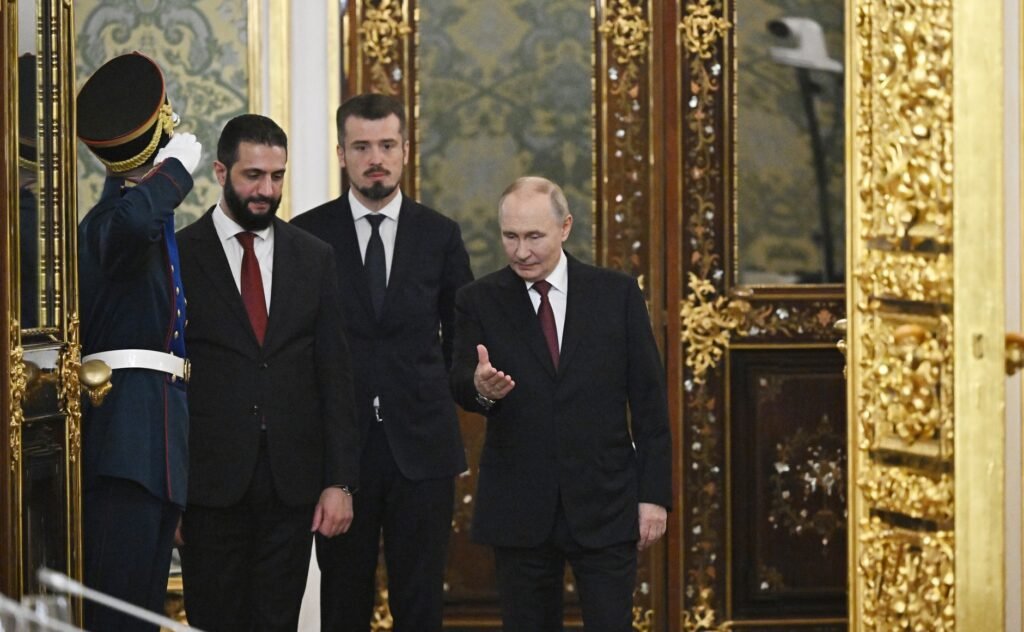
On November 28 2024, Syrian jihadi fighters belonging to Hay’at Tahrir al-Sham (HTS), led by Ahmed al-Sharaa—once a leader of an Al-Qaeda offshoot in Syria—launched a military offensive against Bashar al-Assad. Hollowed out by years of fighting and deprived of crucial military support from allies in Moscow and Tehran, Assad’s regime collapsed on 8 December 2024. The fall of the regime marked the end of the last surviving Ba’athist regime in the Arab world and the beginning of a new political order in Syria, with Ahmed al-Sharaa assuming the presidency.
Russia, which had militarily supported Assad since 2015 against rebel forces such as the HTS, saw a decisive rupture in its decades-long influence in Syria. Assad’s fall appeared particularly damaging in the context of Russia’s inability to secure a decisive victory in Ukraine and its unprecedented isolation from the West. Many Western scholars interpreted the development as the ultimate humiliation of Putin and forecasted the end of Russia’s presence in Syria. The Syrian setback was bound to trigger a negative domino effect on Russia’s broader position in the Middle East.