

The Gaza war has entered a critical new phase. On September 29, 2025, U.S. President Donald Trump hosted Israeli Prime Minister Benjamin Netanyahu at the White House and unveiled a sweeping 20-point Gaza peace plan. Trump had given Hamas until October 5, 2025, to respond. The plan offered to end the war immediately if both sides agreed: hostages would be returned, Palestinian prisoners released, Israeli forces withdrawn in stages, demilitarisation of Hamas, and Gaza placed under transitional governance with international oversight. Trump insists the proposal is the only viable way forward and has warned Hamas to “move fast,” while Netanyahu has said Hamas will be disarmed “either the easy way, or the hard way.”
Why?
The Israel-Palestine war escalated dramatically after the Hamas attacks of October 7, 2023. As a result, Israel launched a relentless military campaign in Gaza, which has continued for two years. Between 7 October 2023 and 24 September 2025, at least 65,419 Palestinians have been killed and 167,160 injured, according to Gaza’s Ministry of Health (via OCHA). UN records show 543 aid workers have been killed, including 370 UNRWA staff and affiliates. The UN has confirmed famine in parts of Gaza: 100% of the 1.98 million people assessed face crisis or worse levels of food insecurity, with malnutrition in Gaza City affecting nearly 28% of children. UNRWA notes that 660,000 children have been deprived of in-person education for the third consecutive year, and over 82% of Gaza remains under militarised displacement orders. More than 1.1 million people have been newly displaced since the March 2025 ceasefire collapse, while 197 UNRWA facilities are now inside militarised or displacement zones.
Multiple ceasefire proposals mediated by Egypt, Qatar, and the United Nations failed. While Hamas signalled flexibility at times, Israel rejected several ceasefire initiatives and ended efforts, maintaining that any truce without Hamas’s dismantlement would only entrench the group further.
Israel continues its occupation of the Gaza Strip. Israel has retained control over Gaza’s borders, airspace, and registry, and its re-entry with ground forces and since 2023 has reinforced perceptions of continued occupation.
It is against this backdrop of stalemate, war fatigue, and global pressure that Trump presented his 20-point plan, aiming to break the deadlock by tying together all the central issues of the conflict.
Trump’s new plan reflects both frustration with these deadlocks and his desire to claim credit for ending a war that has become a symbol of global paralysis. By placing himself at the centre of an international “Board of Peace” and threatening harsher escalation if Hamas refuses, Trump is gambling that a heavily prescriptive U.S.-led approach can succeed where past attempts collapsed. For Netanyahu, the plan is a chance to secure Israel’s hostages while maintaining a narrative of military victory through Hamas’s disarmament.
What is the proposal?
The plan envisions a “New Gaza” that is deradicalised, demilitarised, and rebuilt for its people. Its main elements include:
- Immediate ceasefire and hostage release: Once Israel accepts, all hostilities stop. Within 72 hours, Hamas must return all hostages, alive or deceased. In return, Israel will free 250 life-sentence prisoners and about 1,700 Gazans detained since October 7, 2023, including women and minors. For every deceased Israeli hostage, Israel will release 15 deceased Gazans.
- Amnesty and safe passage: Hamas members who disarm and commit to peaceful coexistence will be granted amnesty; those wishing to leave Gaza will receive safe passage to other countries.
- Humanitarian aid and reconstruction: Full aid flows immediately, with water, electricity, sewage, hospitals, bakeries, rubble clearance, and road access restored. The Rafah crossing will open under UN and Red Crescent supervision, and those organisations not linked to any party.
- Governance: Gaza will be administered by a technocratic Palestinian committee, supported by international experts, and overseen by a “Board of Peace” chaired by Trump, with figures like Tony Blair included. This transitional authority will manage reconstruction until a reformed Palestinian Authority is ready to take over.
- Economic revival: A development plan will attract global investment. A special economic zone with preferential tariffs and access rates will be established to create jobs and opportunities.
- Demilitarisation: Hamas and all factions will play no role in governance. All tunnels, weapons, and production facilities must be destroyed under international monitoring, with a buy-back and reintegration programme to decommission arms.
- Security: A temporary International Stabilisation Force (ISF), backed by the U.S. and regional partners, will deploy to secure Gaza, train vetted Palestinian police, and prevent weapons smuggling. Israel will not annex Gaza; the IDF will withdraw in stages, handing territory to the ISF, but will maintain a temporary perimeter until Gaza is fully secure.
- Dialogue and long-term horizon: An interfaith dialogue will promote coexistence, while U.S.-led talks aim to open a pathway to Palestinian self-determination and eventual statehood. The U.S. will establish a dialogue between Israel and Palestine for peaceful coexistence.
What are the reactions?
Trump’s call for Israel to “immediately stop bombing Gaza” after Hamas issued its response was received with “shock” by PM Netanyahu, according to Israeli media. Netanyahu’s office later said the army was preparing for “the immediate implementation” of the first stage of the plan, but only “in accordance with the principles set out by Israel.” Speaking at the White House, Netanyahu warned that if Hamas rejected the deal, “or if they supposedly accept it and then basically do everything to counter it, Israel will finish the job by itself.” Trump himself pressed both sides to “move fast” or face the risk of escalation.
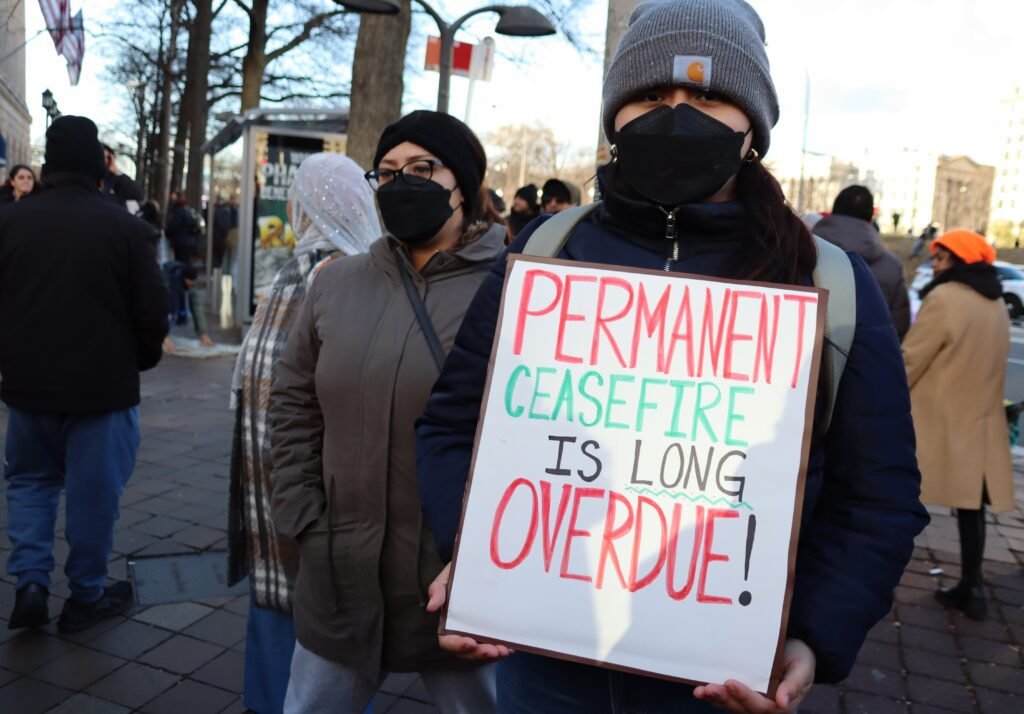
Hamas agreed to release all Israeli captives and transfer Gaza’s administration to Palestinian technocrats, but avoided the question of disarmament. “We will never accept anyone who is not Palestinian to control the Palestinians,” senior Hamas official Mousa Abu Marzouk told Al Jazeera, dismissing Tony Blair’s proposed role as “particularly unwelcome” given his role in Iraq.
Abroad, reactions were cautiously supportive. Qatar praised Hamas’s move, Turkey’s President Erdoğan said “a window of opportunity has opened for lasting peace,” and Egypt called the development “positive.” Palestinian President Mahmoud Abbas emphasised that “sovereignty over the Gaza Strip belongs to the State of Palestine.” India’s PM Modi hailed Trump’s “leadership” and said the release of hostages marked “a significant step forward.”
At the United Nations, Secretary-General Antonio Guterres urged all parties to “seize the opportunity to bring the tragic conflict in Gaza to an end.” UN rights chief Volker Turk called the momentum “a vital opportunity” for lasting peace, while WHO chief Tedros Adhanom said, “the best medicine is peace.” The European Union’s Ursula von der Leyen described Hamas’s reply as “a stepping stone toward lasting stability”, pledging humanitarian and reconstruction support.
Meanwhile, Israeli strikes on Gaza continue, killing at least 24 Palestinians since dawn on Friday.
Where is the resolution as of now?
On October 3, Hamas confirmed its willingness to free hostages but sought adjustments to other clauses. On October 4, Trump warned that “all bets will be off” if Hamas delays, while Netanyahu repeated that Hamas will be disarmed by force if not voluntarily. Israel has also signalled agreement to initial withdrawal steps, with forces moving to Gaza’s fringes but not yet fully exiting.
As of October 5, Trump has called for “everyone to MOVE FAST,” insisting that the first phase of the plan, hostage releases, and initial troop redeployment, should be completed within the week and Egypt has announced that it will host renewed Gaza peace talks in Cairo, bringing Israeli, Palestinian, and international representatives to the table in the coming days. The hope is that these negotiations can translate the momentum around Trump’s 20-point plan into a concrete ceasefire agreement and a roadmap for reconstruction.