

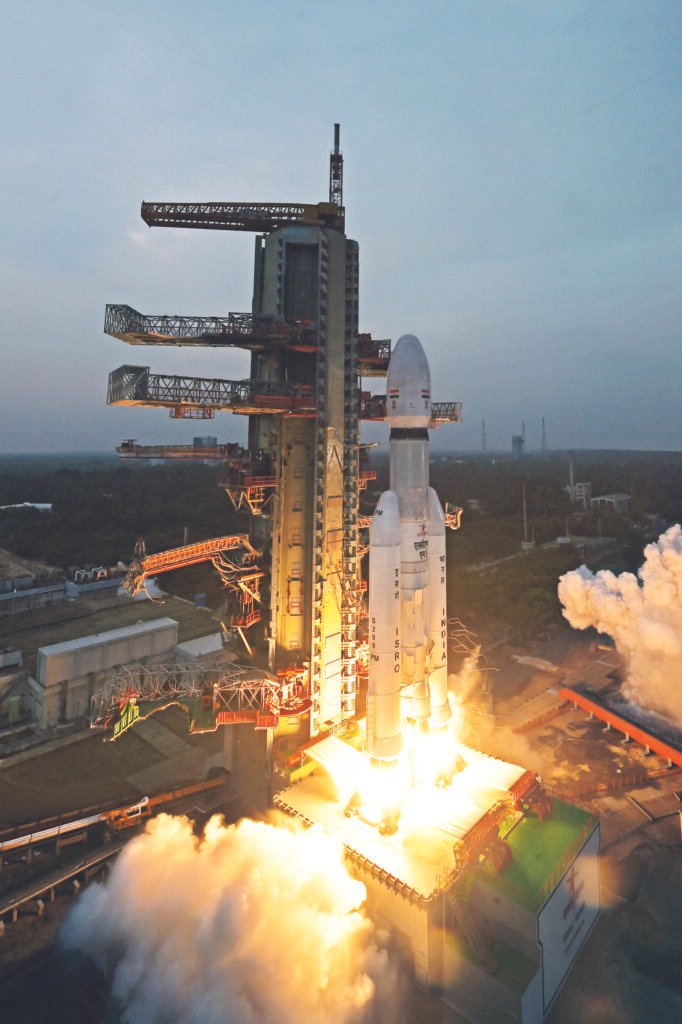
India launched a new military communications satellite, GSAT-7R (CMS-03), on 2 November 2025 from the Satish Dhawan Space Centre at Sriharikota. Developed and launched by ISRO, the satellite is intended to provide the Indian Navy with dedicated, secure communications and enhance network-centric operations across the Indian Ocean Region, including improved coordination among naval platforms operating in key sea lanes.
Pakistan Codifies Military Authority
Pakistan entrenched its civil–military order after parliament in Islamabad approved the Constitution (Twenty-seventh Amendment) Act, 2025 on 12 November 2025. The amendment created the post of Chief of Defence Forces, vested expanded authority in the serving army chief Asim Munir, and curtailed the scope of judicial review by the Supreme Court, drawing criticism from opposition parties and civil society over the erosion of civilian oversight.
India treated a deadly car explosion near the Red Fort in New Delhi on 10 November 2025 as a terrorist incident, launching a wide investigation involving federal agencies. The Union Cabinet formally designated the blast a terrorist act on 12 November 2025 and tasked the National Investigation Agency with leading the probe. The government said all angles, including possible cross-border linkages, were being examined, but it has not officially attributed responsibility to any foreign state.
Turkey blocked the transit of Apache helicopters bound for India by denying overflight clearance in early November 2025, forcing the Antonov AN-124 carrying them to return to the United States after being held on the ground in England. The disruption followed diplomatic strain between New Delhi and Ankara over Turkey’s support for Pakistan and highlighted how political frictions can directly affect defence logistics and delivery schedules.
India notified the long-delayed Digital Personal Data Protection Rules on 14 November 2025 through the Ministry of Electronics and Information Technology, providing an eighteen-month phased compliance window. The rules operationalise the Digital Personal Data Protection Act by defining obligations for data fiduciaries, cross-border data handling norms, and enforcement mechanisms, with significant implications for technology firms operating in India.
India Trade Shifts Amid Global Pressures
India’s trade data released in mid-November 2025 showed a decline in imports from Russia in some non-energy categories, even as crude oil inflows remained volatile and rebounded later in the year. Over the same period, trade with the United States expanded despite higher tariffs, driven by resilient export growth. Officials characterised these movements as tactical, shaped by pricing conditions and tariff structures, rather than evidence of a fundamental shift in India’s overall trade orientation.
Indonesia advanced discussions with India in New Delhi in late November 2025 on the possible purchase of the BrahMos cruise missile system during bilateral defence engagements. The talks underscored India’s growing role as a defence exporter and Jakarta’s interest in strengthening deterrence capabilities amid evolving Indo-Pacific security dynamics.
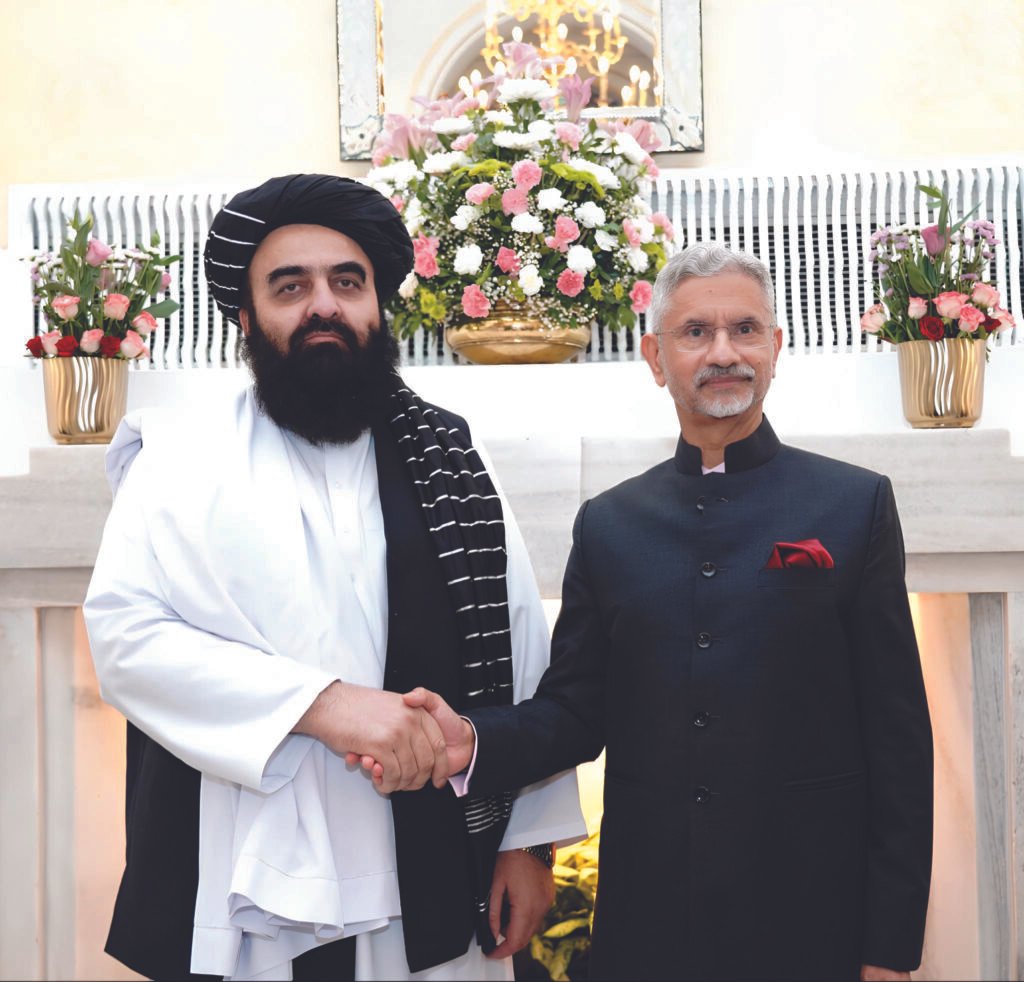
India expanded engagement with Afghanistan in 2025, including restoring full embassy status in Kabul on 21 October 2025 and holding subsequent discussions on trade, air cargo connectivity, and reconstruction assistance. New Delhi has continued mission-level engagement without extending formal diplomatic recognition to the Taliban government.
India–Bangladesh Security Talks Resume
Bangladesh and India moved to stabilise strained ties as senior security officials met in New Delhi on 19 November 2025, marking the first such engagement since the political upheaval in Dhaka. The meeting focused on maintaining security coordination, border management, and preventing further deterioration in bilateral relations.
India accelerated emergency procurement of drones, precision-guided munitions, and surveillance systems in late November and early December 2025, reflecting operational lessons from recent military engagements. Additional orders for satellite-linked Heron Mk II unmanned aerial vehicles were placed for the Army and Air Force, with the Navy inducting the platform for the first time.
India–Canada Repair Trade Ties
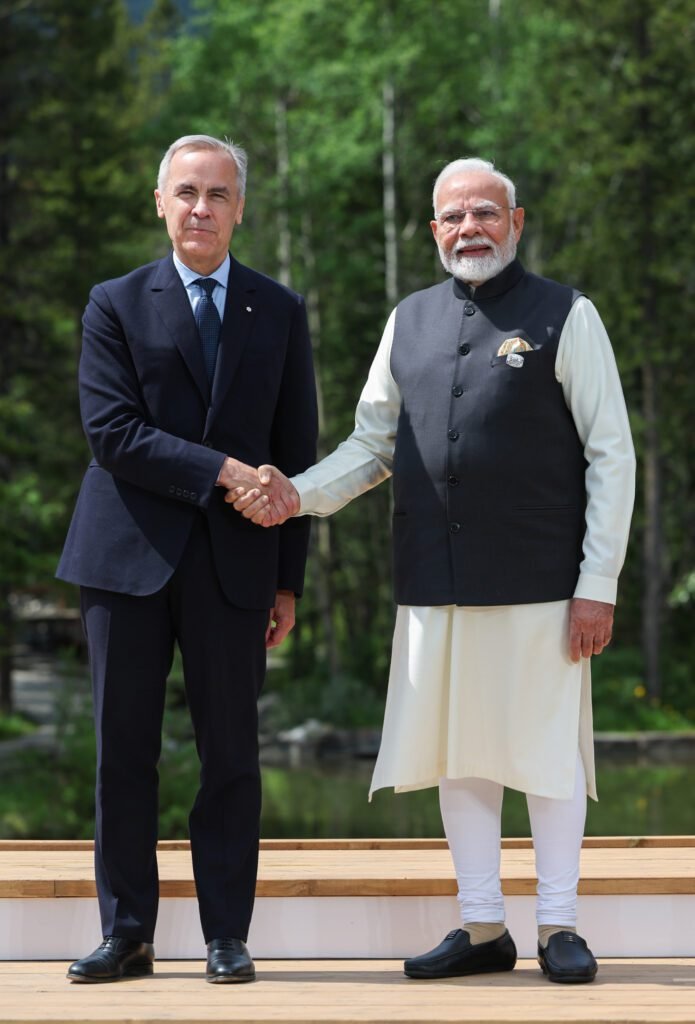
Canada and India moved closer to resolving trade and energy disputes in late November 2025 as the two sides made progress toward a long-term uranium export agreement valued at about US$2.8 billion. New Delhi and Ottawa also signalled interest in reviving broader trade negotiations, including stalled talks on a comprehensive partnership agreement, following a period of estrangement.
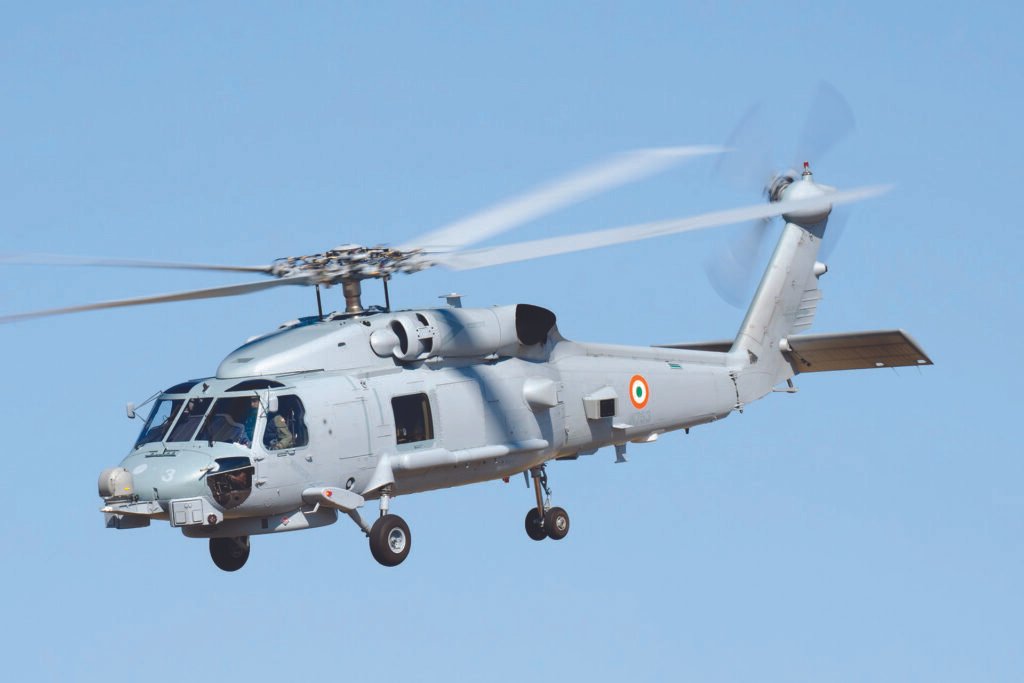
India and the United States deepened operational defence links on 28 November 2025 by signing agreements worth about $900 million to support the Indian Navy’s MH-60R Seahawk helicopter fleet. Concluded under the US Foreign Military Sales framework, the pacts cover multi-year sustainment, logistics, training, and technical support, including spares and component repair. It also provides for establishing repair and maintenance facilities in India, aimed at improving fleet availability and building in-country sustainment capacity. Officials said the agreements would reinforce interoperability between the two militaries and underline continuity in defence cooperation despite wider trade frictions.
India Flags Timing of European Criticism
European envoys from France, Germany, and the United Kingdom drew a sharp response from New Delhi after publishing a joint opinion piece critical of Russia in early December 2025 ahead of President Vladimir Putin’s visit. The Ministry of External Affairs described the timing as inappropriate and conveyed its displeasure through diplomatic channels.
Putin Visit Reaffirms India–Russia Ties
Russian President Vladimir Putin travelled to New Delhi on 4–5 December 2025 for his first state visit to India since 2021. The visit focused on defence cooperation, energy ties, and strategic coordination, reaffirming the continuity of bilateral relations despite mounting external pressures on both countries. In their Joint Statement following the 23rd India–Russia Annual Summit on 5 December 2025, the two leaders emphasised the special, long-standing, and time-tested nature of the relationship, describing it as one characterised by mutual trust, respect for each other’s core national interests, and strategic convergence.
Relations between India and China showed cautious signs of stabilisation, but underlying frictions persisted. On 8 December 2025, the Ministry of External Affairs advised Indian citizens to exercise due discretion when travelling to or transiting through China following reports of an Indian national being detained at a Chinese airport.
Talks between India and the European Union gained momentum during ministerial discussions in Brussels on 8-9 December 2025, as both sides sought to accelerate negotiations on a long-pending trade agreement despite unresolved differences over tariffs, regulatory standards, and market access. These talks took place in the backdrop of the technical discussions held from 3-9 December 2025 in New Delhi across key chapters of India-EU FTA covering Market Access for Goods, Rules of Origin, Services, Technical Barriers to Trade, Trade and Sustainable Development, etc.
Tariffs Test India–US Partnership
India’s relationship with the United States took on a more overtly transactional character after Washington imposed higher tariffs linked to India’s continued purchases of Russian oil. Prime Minister Narendra Modi spoke by phone with President Donald Trump on 11 December 2025 as New Delhi sought relief from the duties while attempting to contain trade frictions within a broader framework of strategic cooperation.
India Advances Trade Talks With Oman
India pushed ahead with Gulf diplomacy in mid-December 2025, edging closer to negotiations on a trade agreement with Oman. Prime Minister Narendra Modi was scheduled to visit Muscat on 17–18 December 2025 as part of his overseas tour, with Commerce Minister Piyush Goyal also expected to be present to advance talks aimed at diversifying economic ties beyond hydrocarbons.
On 8 December 2025, the U.S. Defence Security Cooperation Agency (DSCA) notified the U.S. Congress of a $686 million package to provide advanced technology, support, and upgrades for Pakistan’s F-16 fighter fleet. The move revived a limited defence channel with Islamabad and drew attention to shifting regional security calculations.