

A selection of recent books shaping debates on economics, politics, and social life at large.
A Sixth of Humanity: Independent India’s Development Odyssey
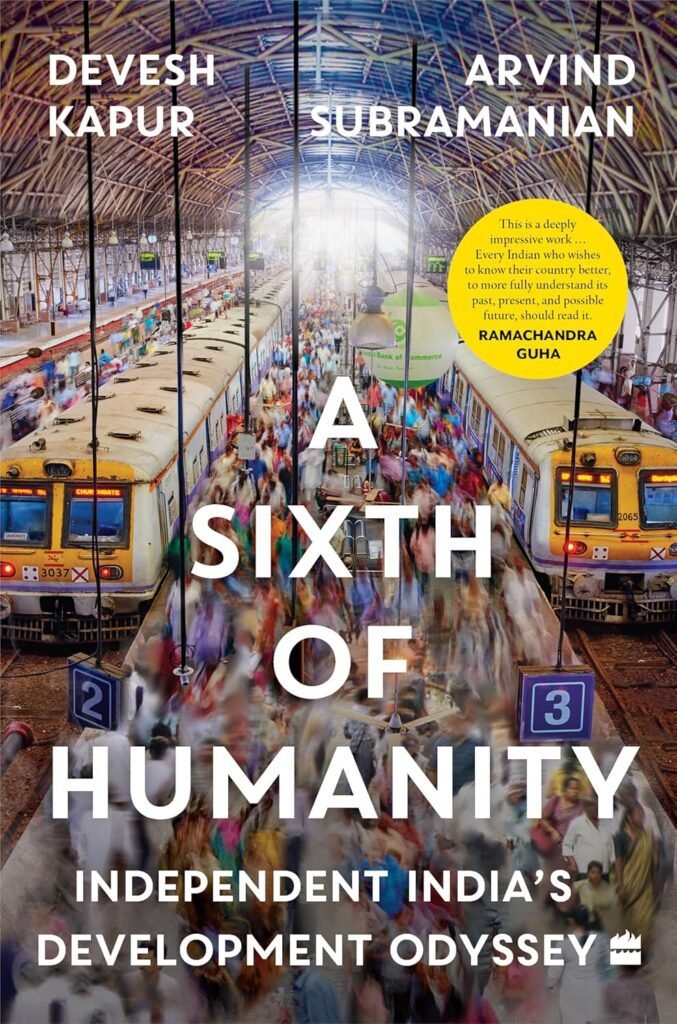
By: Devesh Kapur, Arvind Subramanian
Published: October 2025
Kapur and Subramanian offer a sweeping, 75-year account of India’s economic evolution that resists neat or one-dimensional explanations. They portray India’s path as unusual and early-starting, shaped by democratic institutions and a deeply diverse social landscape. Their measured assessment highlights India’s democratic durability and the dynamism of its services sector, while confronting the enduring obstacles in manufacturing, welfare delivery, and infrastructure. The book delivers a nuanced, evidence-rich portrait of India’s economic trajectory.
The Great Global Transformation: The United States, China, and the Remaking of the World Economic Order
By: Branko Milanović
Published: June 2025
Branko Milanović offers a wide-angle view of a global system undergoing dramatic change. He argues that the neoliberal globalisation that followed the Cold War is coming apart, giving way to trade blocs, tariff disputes, and resurgent nationalist politics in place of expansive multilateral cooperation. The rise of Asia sits at the heart of this shift: fast-growing economies are generating a new worldwide middle class even as inequality and political frustration intensify. Blending historical narrative, empirical evidence, and economic theory, the book explains the emergence of a multipolar world and the revival of nationalism.
Chip Wars: NVIDIA vs. the World – AI, GPUs, and the Future of Computing
By: Logan Cresthaven
Published: September 2025
Logan Cresthaven traces the evolution of modern computing through NVIDIA’s rise to dominance in GPUs. Spanning from the earliest microchips to today’s so-called “trillion-dollar race,” he explains how graphics processors emerged as central to the development of AI. His central claim is that semiconductors have become a primary source of economic and strategic leverage, and the control of chips increasingly shapes global power. What appear as “chip wars,” Cresthaven contends, are ultimately struggles over technological leadership and geopolitical dominance.
The Scaling Era: An Oral History of AI, 2019–2025
By: Dwarkesh Patel, Gavin Leech
Published: October 2025
Patel and Leech frame the book as a spoken-history archive distilled from Dwarkesh Patel’s podcast and more than 100 hours of conversations with leading AI figures such as Amodei, Hassabis, Sutskever, Yudkowsky, and Zuckerberg. A recurring theme is the dominance of scale: advances in AI are portrayed as being driven largely by ever-larger datasets, models, and compute, in line with Sutton’s “bitter lesson.” Rather than advancing a single overarching claim, the book assembles a collage of perspectives on topics ranging from safety and economic impact to the timing of AGI.
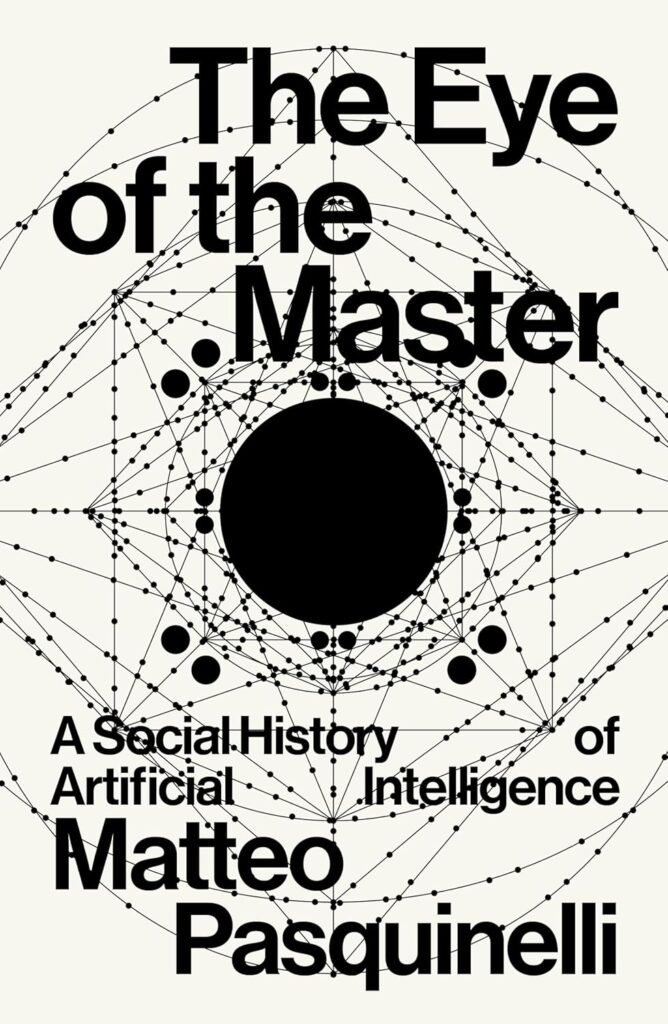
The Eye of the Master: A Social History of Artificial Intelligence
By: Matteo Pasquinelli
Published: October 2023
Matteo Pasquinelli presents a politically charged genealogy of AI rooted in Marxist theory, contending that machine “intelligence” emerges from collective labour rather than attempts to replicate the human mind. He follows AI’s development through the history of industrial machinery and surveillance systems, arguing that algorithms mirror how work is organised, from Babbage’s mechanical designs to contemporary neural networks, instead of reproducing cognition itself. For Pasquinelli, claims about autonomous machines obscure the reality that AI represents labour automation on a massive scale.