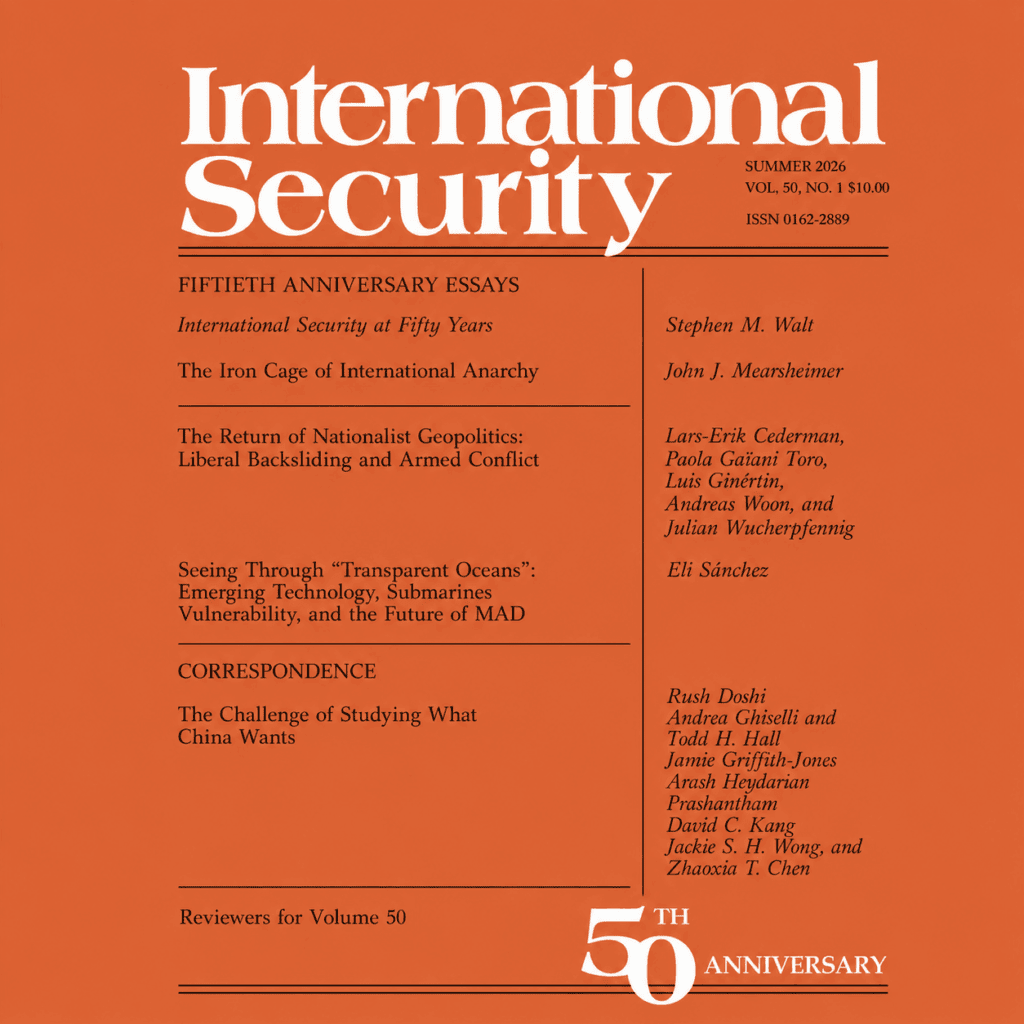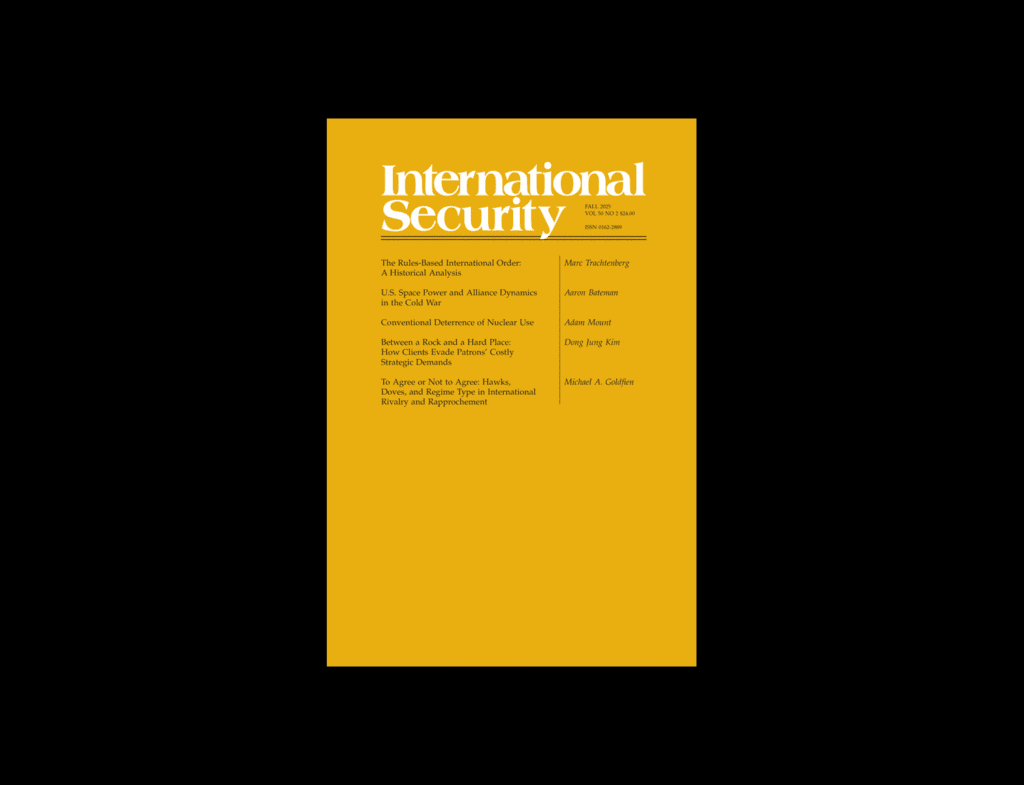
Professor Marc Trachtenberg, in his article The Rules-Based International Order: A Historical Analysis (International Security, Vol. 50, No. 2, Fall 2025), challenges the prevailing view that the network of post-1945 Western institutions and norms, created under U.S. leadership, was itself the primary cause of the long peace among major powers. Prof. Trachtenberg argues that historians and policymakers’ reverse causality by treating institutions as the source of peace when they were in fact consequences of political settlements. Stability, in his account, emerged not from liberal norms or multilateral procedures but from strategic accommodation between great powers, especially the United States and the Soviet Union.
The article reassesses illustrative cases in postwar international-order debates such as the Atlantic Charter, Bretton Woods arrangements, and NATO. These appear not as generators of order but as institutional expressions of prior geopolitical bargains. The United States, Trachtenberg shows, did not embark on a coherent project to build a liberal international order. Early planning accepted spheres of influence and hierarchical arrangements as necessary to prevent renewed great-power conflict. Institutions formalised a settlement already secured through power-political negotiation.
Prof. Trachtenberg summarises the argument directly:
“The U.S. government had not set out during and immediately after World War II to construct a liberal international order… If there was peace, that was because a fundamental understanding with the Soviet Union was eventually worked out… Institutions were not nearly as important as many writers say they were… there were, and are, alternative approaches… based on certain traditional ideas about how policy should be conducted.”
From this historical reconstruction Prof. Trachtenberg advances three claims. First, the origin story of the liberal order is retrospective mythmaking. Second, institutions stabilise only when underlying power relations are settled and may otherwise generate friction. Third, the assertion that no alternative exists to a liberal rules-based system overlooks earlier strategies grounded in balance, restraint, and recognition of rival interests.
The article concludes that postwar order rested less on universal rules than on negotiated limits among major powers. Debates about defending the rules-based order therefore misidentify the source of stability when institutions are detached from the political settlements that sustain them.