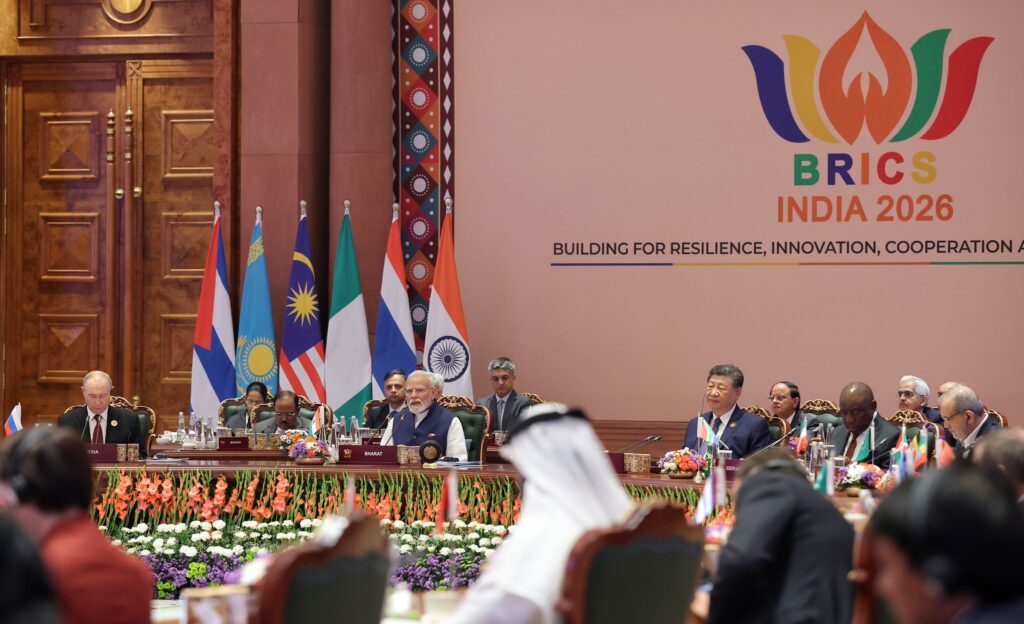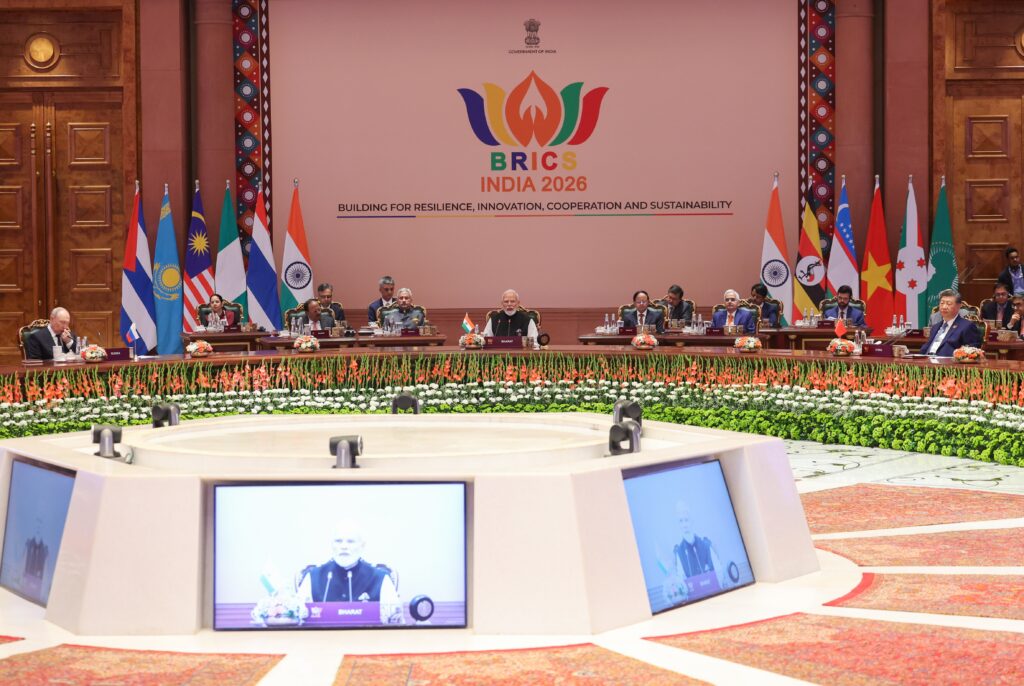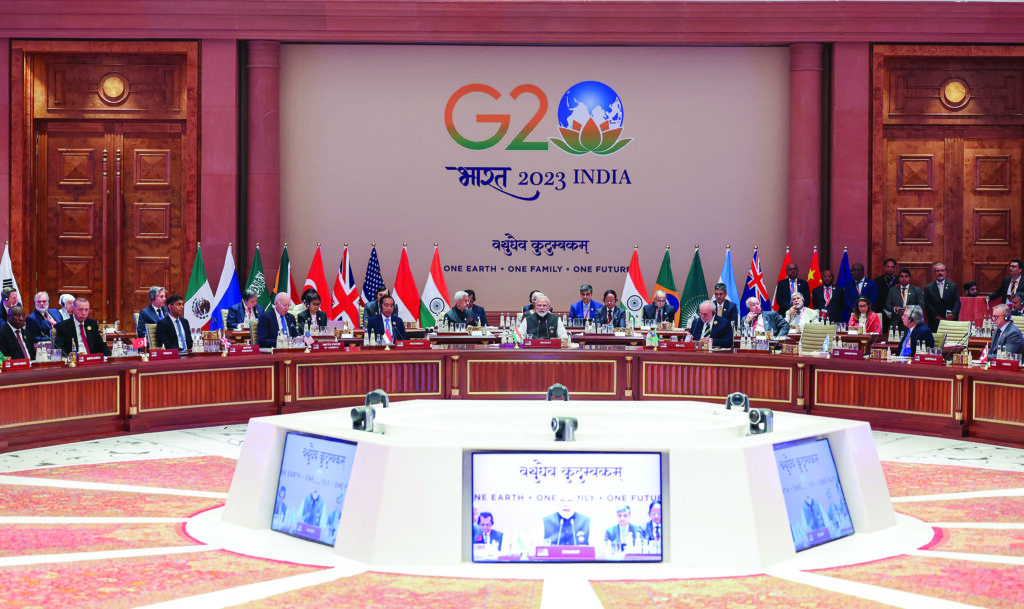
Artificial intelligence is the rage today, reshaping the global architecture of power, productivity, and governance. Technology is no longer merely a product or a tool; it has become the site of the most consequential contestations of the twenty-first century. For India, this moment represents a defining crossroads: will it remain a taker of rules written by others, or will it seize the opportunity to become a rule-shaper?
Our latest issue, “India’s AI Ambition,” is dedicated to addressing this question by examining India’s AI preparedness from multiple angles. Arriving just ahead of the AI Impact Summit this month, the issue unpacks everything from the geopolitics of chips and compute to the high table of global governance norms, exploring where India stands today and where it must go from here.
We have brought together some of India’s top experts to help us understand the country’s AI ambitions, limitations and challenges. A common thematic thread running through many of the essays is an urgent call to thoughtful policy, action, and norm-setting. Nitin Pai’s lead piece argues that India’s path to AI power lies not in grand doctrines but in “sectoral plurilateralism,” and Santosh Pai makes a compelling case for India offering a “third path” in global governance that bridges the trust-development divide. Former UN Permanent Representative Syed Akbaruddin warns that power ultimately belongs to those who write the rules, and Lt. Gen. D.S. Hooda maps a new “strategic geography” in which sovereignty is defined as much by digital supply chains as by territorial borders. These are powerful interventions into some of the most debated issues in India’s pursuit of AI.
Only around 30% of the magazine is devoted to mainstream geopolitics. Beyond the cover theme, there are rich, diverse and thoughtful takes on history, art, culture, films, music, and more. Don’t forget to take a look at the cartoons, news snippets, and crossword!
As always, I have two personal favourites in this issue. First, Vineet Thakur’s “Caste in the Corridor,” which offers a fascinating historical account of how social hierarchies quietly shaped Indian diplomacy—a reminder that our institutions are a reflection of our society. Second, “Searching for Sri Aurobindo,” by Noah Pickus, a moving memoir that bridges generations and borders, tracing a father’s journey to India in 1950 and a son’s return decades later. It is stories like these that make India’s World more than just another magazine on foreign policy.
At over 55,000 words, this may seem like a ‘heavy’ issue, but we have ensured it remains accessible, evocative, argumentative, and deeply engaging. I strongly believe this eclectic mix of hard strategy, memorable history, and our rich culture is essential to fully comprehend India’s place and voice in the world.
I hope you find this issue as stimulating as the previous ones. I would love to hear your thoughts—write to me at editor@indiasworld.in and let me know what you think of our journey so far.
I am convinced that if there was ever a time to closely follow world politics, it is now. And if there was ever a moment when India stood at the centre of global conversations, it is now. At India’s World, we will track it, interpret it, and curate these unique times for you.
Read, subscribe, and support India’s World—and witness international relations unfold as never before.

Happymon Jacob