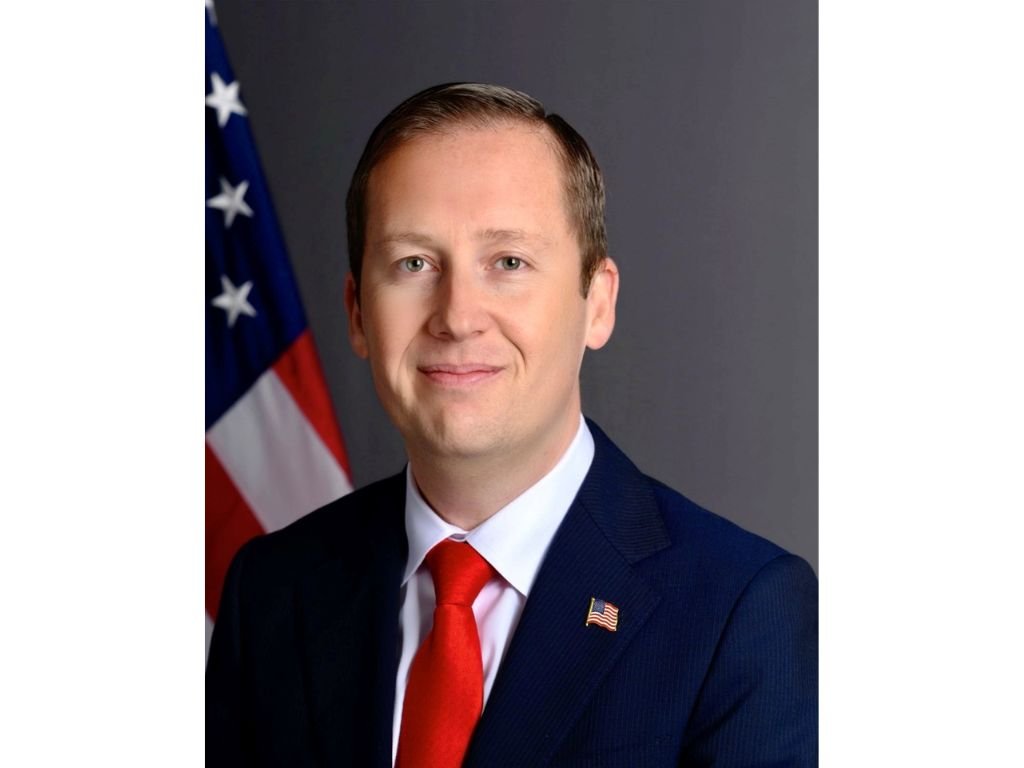
On January 9, 2026, US ambassador-designate to India, Sergio Gor, arrived in New Delhi. Gor was sworn in as US ambassador on November 10, 2025, at a ceremony administered by Vice President J.D. Vance in the Oval Office of the White House, with President Donald Trump also in attendance. A major player in the political action committee (PAC) supporting Trump and his campaign for the 2024 presidential election, Gor described his appointment as “an honour of a lifetime” as he aimed to enhance the US-India relationship, at a time when the US had imposed a 50% tariff on Indian goods.
On January 12, 2026, he was formally welcomed as ambassador—succeeding Eric Garcetti—at the US Embassy in New Delhi. Addressing the State Department staff and members of the media, Gor spoke as the room resonated with American music, from “Hold On, I’m Coming” by Sam and Dave to “YMCA” by Village People, a playlist personally chosen by the ambassador.
Two days later, he presented his credentials to President Droupadi Murmu at Rashtrapati Bhavan, thereby becoming the 27th US Ambassador to India. His assertion that “no partner is more essential than India” captured the depth of Washington’s expectations as Sergio Gor assumed his charge in New Delhi.
Background
To understand the man entrusted with this task, one must, however, look beyond the embassy at Shantipath, New Delhi, to a life shaped across borders, political systems and identities. Born on November 30, 1986, in Tashkent (then part of the Soviet Union, now Uzbekistan) as Sergey Gorokhovsky, he moved with his family to Malta in 1994. Later in 1999, he migrated to the United States, where he completed high school in Los Angeles and, in 2008, graduated from George Washington University (GWU) with a bachelor’s degree in political science and international affairs.
An active member of conservative student organisations, Gor was also part of the College Republicans and the founder of GWU’s chapter of Young America’s Foundation.
From Activism to Capitol Hill
After graduating from George Washington University, Gor transitioned from campus activism to professional political work. He served as the spokesman for Republican leaders such as Congressman Steve King (Iowa) and Congresswoman Michele Bachmann (Minnesota). He later served as the communications director for Congressman Randy Forbes (Virginia). These roles resulted in his having front-row access to internal GOP debates, especially during the Obama years, broadening his connections and reach within conservative media and policy circles.
In 2013, he joined RANDPAC, the political action committee of Senator Rand Paul (Kentucky), as the communications director. He soon cemented his position, becoming Paul’s spokesman and eventually deputy chief of staff, aligning himself closely with the libertarian-leaning section of the GOP.
Becoming Part of the Trump Movement
In 2020, Gor left Rand Paul’s office to become chief of staff for the Trump Victory Finance Committee during President Donald Trump’s re-election campaign. This role marked his shift from a Capitol Hill insider to a strategist engaged in national-level campaign operations.
With Donald Trump Jr., with whom Gor had worked closely, he co-founded Winning Team Publishing in 2021—a conservative publishing house that released books authored by Donald Trump, including Our Journey Together (2021), Letters to Trump (2023), and Save America (2024). His influence expanded rapidly within the broader Trump movement, as he became a senior adviser to MAGA Inc. and ran the pro-Trump super PAC, Rights for America, which raised substantial funds for Trump’s 2024 campaign. Gor thus emerged not merely as a behind-the-scenes operative but as a visible figure within the Trump ecosystem.
Rising Political Influence and White House Power
In November 2024, Gor was appointed as Director of the White House Presidential Personnel Office (PPO), a role that allowed him to oversee the vetting, recruitment, and placement of thousands of staff across the federal government, ensuring that appointees were strongly committed to the ‘America First’ agenda. He was credited with an unusually rapid hiring pace, placing nearly 4,000 individuals in government roles, including 1,300 staff on “Day One” of the administration.
However, he also found himself at the centre of a rift with Elon Musk, after it was alleged that Gor influenced the withdrawal of Musk’s preferred nominee for NASA Administrator—an episode that underscored how close Gor had become to Trump’s inner circle.
Diplomatic Elevation
In August 2025, President Donald Trump announced Gor’s nomination as US Ambassador to India and Special Envoy for South and Central Asian Affairs—a major diplomatic posting that expanded Gor’s portfolio from domestic personnel politics to global diplomacy. The appointment came at a time when US-India relations were marked by trade tensions, including a 50% tariff on Indian goods.
In his remarks, Gor expressed optimism on trade, security, and regional stability, signalling an ambitious agenda for engagement. His appointment highlighted the Trump administration’s intent to anchor its Indo-Pacific strategy in trusted hands while maintaining close coordination with New Delhi. As Special Envoy for South and Central Asia, his responsibilities extended beyond bilateral ties to encompass broader regional diplomacy, particularly amid shifting geopolitical currents involving Russia and China.
Assuming Office as India’s 27th US Ambassador
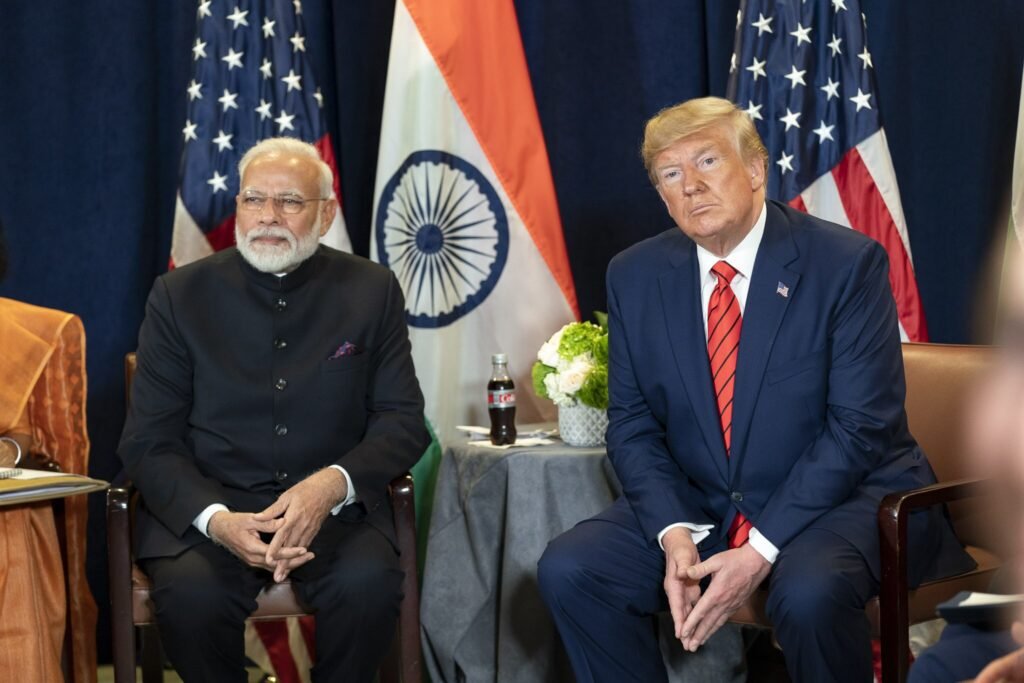
In his arrival speech in New Delhi, Gor offered a concise glimpse of what his ambassadorship would entail. The address, a reaffirmation of his personalised diplomacy, situated President Trump and Prime Minister Modi within a narrative of genuine friendship, signalling that US-India relations under his watch would be anchored not only in institutional frameworks but also in leader-level trust.
Reflecting Gor’s political style, shaped by his proximity to Trump’s inner circle, the speech emphasised that loyalty and direct access would matter as much as formal diplomatic channels. By underscoring cooperation in security, counter-terrorism, energy, technology, education, and health, Gor reassured New Delhi that economic disagreements would not derail the broader resilient partnership.
Most important, however, was his announcement of an invitation for India to join Pax Silica. By inviting India to participate in the US-led semiconductor supply-chain initiative, spanning critical minerals to advanced manufacturing, alongside the UK, Israel, Japan and South Korea, Gor positioned India at the core of an emerging techno-strategic bloc.
Political Influence and Strategic Implications
Sergio Gor’s appointment marks a departure from conventional diplomatic practice, reflecting the Trump administration’s preference for politically trusted insiders over career foreign service professionals. His trajectory—from a senior figure in the GOP and the MAGA ecosystem to US ambassador to India—underscores a governing style rooted in loyalty, speed and direct access to power.
For India, this presents a channel of unusual political proximity to the White House. Gor’s ability to translate New Delhi’s priorities directly to Washington will make him a consequential bridge at a moment marked by both strategic convergence and economic friction. Ultimately, his profile signals India’s centrality to US policy and underscores how New Delhi now lies not at the margins but at the core of Trump-era decision-making.