From Trump’s targeting of Huawei in the 5G tussle to Biden’s export controls on semiconductor chips, there has been bipartisan US pressure to slow China’s tech rise. But this intensifying US-China tech rivalry disadvantages developing countries like India because contesting powers tend to restrict global flows of technology and critical materials. The Biden administration’s AI diffusion rules (now rescinded) and China’s expansive rare-earth export controls illustrate this.
The bipartisan approach to China, however, has come under strain during Trump’s second term. From backtracking on Nvidia chip restrictions to recently reaching a comprehensive deal with China that spans rare earths, AI chips and tariffs, the larger trend indicates a brewing rapprochement between Washington and Beijing. But this rapprochement between major tech powers also does not serve India’s interests, as it could reduce the US’s urgency of engaging with China’s neighbours in the Indo-Pacific region.
This essay argues that, unless India fully aligns with a major tech bloc, neither tech competition nor rapprochement will be beneficial. Architecting a pathway that safeguards India’s tech sovereignty (and strategic autonomy) while resisting autarky requires a multi-pronged approach: promotion of open technologies, deepening of international tech collaborations and, crucially, championing diffusion of general-purpose technologies (GPTs).
From supply chain security to outright rivalry
When the US-China tech relationship began to sour during Trump’s first term, the rhetoric initially focused on compromised supply chains rather than outright tech rivalry. Telecom epitomised the shift: fear of backdoors in telecom equipment supplied by Chinese players such as Huawei and ZTE soon morphed into a battle for 5G supremacy. In 2017-18, the US began restricting Chinese telecom equipment in domestic use, and during the latter half of the first Trump administration, Huawei’s access to American technology was also being limited.
Under Biden, the confrontation widened to semiconductors and AI. In his final days in office, Biden expanded the rivalry with China in sectors such as automotives. In January 2025, Biden released the infamous AI diffusion framework, which divided the entire world into three tiers to manage the flow of tech and material behind the AI boom. China was placed in the most restrictive tier 3.
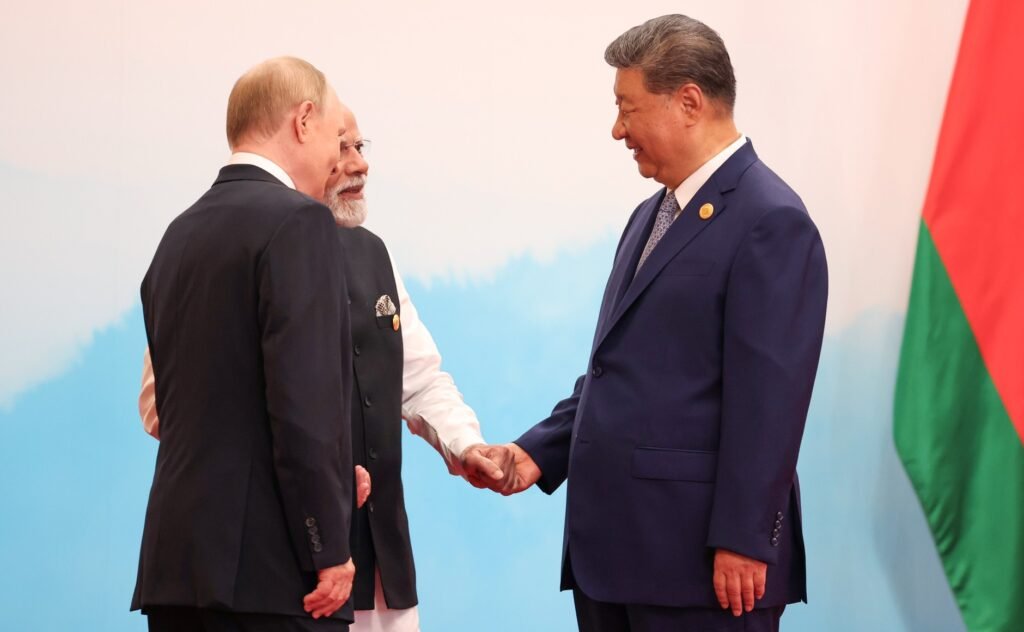
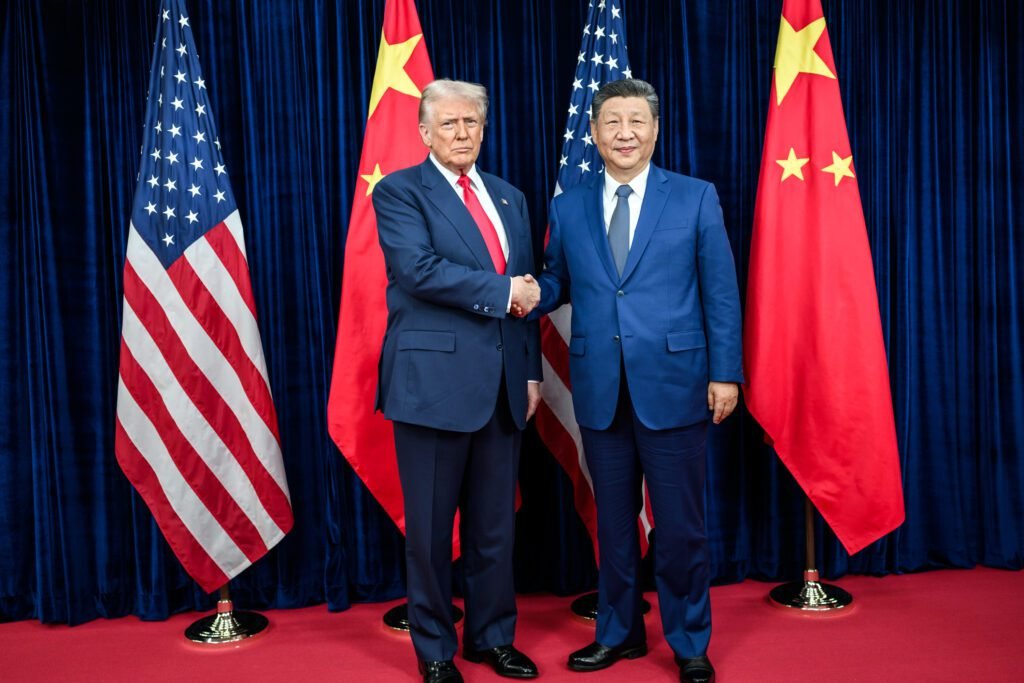
It was expected that Trump would continue targeting China in multiple tech sectors. At first, there were signs of an intensifying tech rivalry. In April 2025, the Trump administration had even banned the downgraded H20 Nvidia chips, which were designed for the Chinese market. But soon enough, the US backtracked, freezing export controls designed for China and rescinding Biden’s AI diffusion framework. While it is debatable why Trump changed course a few months into his second term, Farrell and Newman have suggested in a Foreign Affairs article that China’s rare-earth export controls prompted this shift. Then, in early October 2025, China significantly expanded export controls on rare earths in a move that targeted not just the US but the entire world. While Trump initially responded with threats of more tariffs and export controls on critical software flows, he reached a deal with Xi Jinping during their meeting in Busan, South Korea. The deal revealed a preference for some form of rapprochement instead of intensifying contestations on technology, materials, and trade.
Neither competition nor rapprochement is in India’s interest
The US-China tech rivalry’s immediate harms to India are plain. When major powers contest tech supremacy, they constrain flows of technology and critical inputs—a pattern seen in Cold War controls on nuclear and space technologies and repeated in the current US-China contest. Biden’s AI diffusion rules, though aimed at China, also restricted flows to many developing countries; India, in tier 2, faced ad-hoc procurement obstacles and bureaucratic hurdles for AI chips and models. China’s export controls on rare earths and other measures similarly affected developing countries, India included.
Less obvious is how a US-China tech rapprochement might harm India. It is highly likely that a rapprochement may reduce the US’s urgency of engaging with China’s neighbours as part of the Indo-Pacific strategy. This may not fully reverse or halt, but instead lead to slowing the “China+1” movement that benefits India, as well as Vietnam and other Southeast Asian countries. Trump’s threats to impose tariffs on Apple for shifting iPhone production to India illustrate the risks of an American administration unsympathetic to India’s techno-economic aspirations.
The bipartisan US focus on India in the Indo-Pacific has been eroded by the polarising MAGA worldview in Trump 2.0, which targets India over issues ranging from Russian oil purchases to migration and trade. Any potential US-China rapprochement, spanning various tech sectors as well as the overall relationship, would only cement MAGA’s worldview, where the US, Russia, and China have their zones of influence.
Beyond US and China: Architecting the ‘India’ way
For countries in Europe, Asia, and Latin America, waiting out a volatile US presidency is not a reliable strategy: the political shifts Trump represents are likely to outlast him.
While aligning with either US or China completely may remove the hindrances on the flow of technology, capital or material to India, such an alignment would not be in India’s strategic long-term interests. Only a multi-pronged approach can help India build its technological strengths, irrespective of the status of the US-China tech relationship.
First, India should promote open technologies and hardware. Proprietary technologies underpin the technological dominance of the global “haves”; open alternatives are harder to geographically constrain. Practically, India could collaborate with Europe on creating an alternative to Nvidia’s Compute Unified Device Architecture or foster open alternatives to proprietary electronic design automation tools to break the stranglehold of a few dominant players in chips and AI.
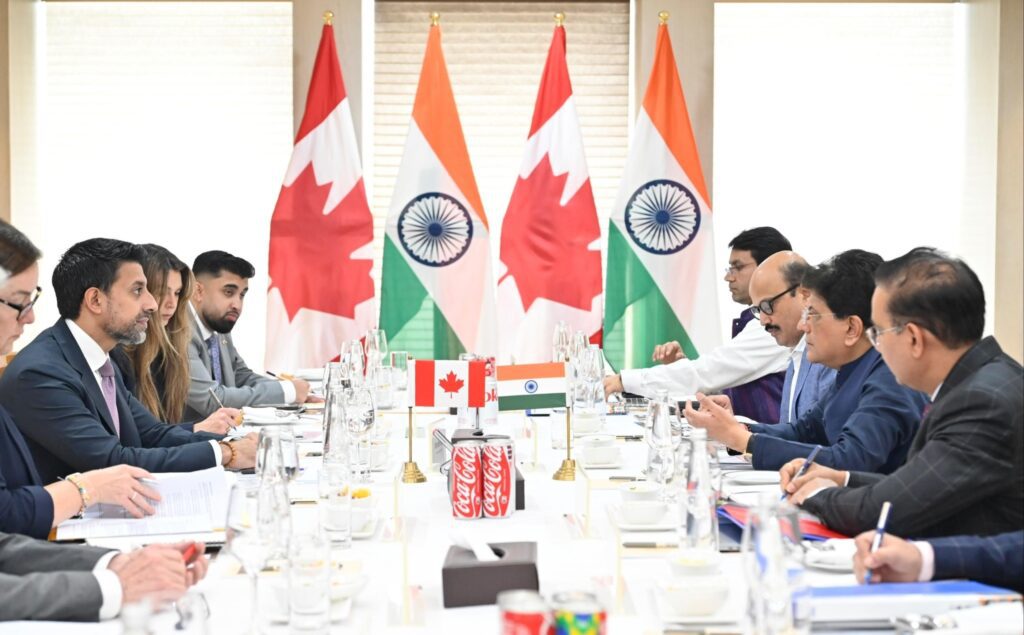
Second, learning from historical experiences in the nuclear and space sector, India should double down on tech collaboration with international partners before the window of opportunity closes. In nuclear and space, India weathered export control regimes like the Nuclear Suppliers Group and the Missile Technology Control Regime in part because of the foundational capability the country had built through early collaborations with Canada, the US, the Soviet Union, and France.
Finally, New Delhi should champion the diffusion of GPTs domestically and abroad. In Technology and the Rise of Great Powers, Jeffrey Ding states that winners and losers of the great tech rivalries of the past industrial revolutions (IRs) were defined by which power better diffused the GPTs relevant in those time periods. Therefore, Britain’s rise during the first IR (1780-1840) was because of better diffusion of mechanical skills across industries. Further, in the second IR (1870-1914), focus on diffusing interchangeable manufacturing and internal combustion engines among other GPTs propelled the US’s ascendancy.
In the current (fourth) IR, AI is central. Therefore, in addition to cutting-edge AI innovation, India should focus on diffusing AI across sectors by expanding knowledge infrastructure. Going beyond the domestic focus, India should partner with other developing countries to push for creation and sustenance of multilateral mechanisms that promote diffusion of GPTs of today and tomorrow.
The three components of the multi-pronged approach outlined above are not isolated but will intersect and, in some cases, reinforce each other. For example, promotion of open technologies (such as open-source AI models) can go together with championing of GPTs, as open technologies are more suited for diffusion compared to proprietary ones. Similarly, international collaborations will be key to both development of open alternatives and diffusion of GPTs.
Technological rivalries and rapprochements among major powers are recurring features of geopolitics. The US-China tech contest is not unprecedented, but its implications for India are distinct: neither intensified rivalry nor rapprochement advances India’s interests. A strategic, multi-pronged policy—promoting open technologies, deepening international collaborations, and championing GPT diffusion—can help India chart an independent technological trajectory regardless of great-power machinations.