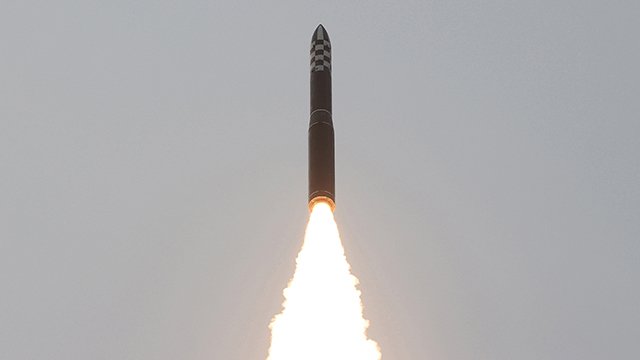
A House of Dynamite is far removed from how nuclear systems actually function. Its catastrophe is manufactured, its panic overstated. Yet beneath these technical implausibilities, the film captures something unsettlingly real: the thin margins, human anxieties, and institutional fragility that define nuclear decision-making in an age of eroded guardrails.
“At the end of the Cold War, global powers reached the consensus that the world would be better off with fewer nuclear weapons… That era is now over.”
This is the first thing that A House of Dynamite tells us—before it plunges into sirens, countdowns, and panic. Reading like a promise from another era, director Katherine Bigelow clearly wants us to feel the distance between that consensus and the world we inhabit now. In doing so, the film wears its agenda openly: to force the viewer back into an arms-control conversation that contemporary politics has long abandoned, by placing us in the most terrifying scenario imaginable.
But in pursuing that agenda, A House of Dynamite bends reality until it creaks. Especially for a film that presents itself, almost self-proclaimedly, as accurate, procedural, and realistic, it gets its most important facts wrong. With no mention of nuclear hotlines, allied radar networks, or military-to-military communications, the film depicts a paralysed U.S. rendered vulnerable by an unidentified missile groping in the dark. These distortions—whether compressed for cinematic tension or simply mis-rendered—ironically shape the film’s politics in ways opposite to Bigelow’s apparent intent.