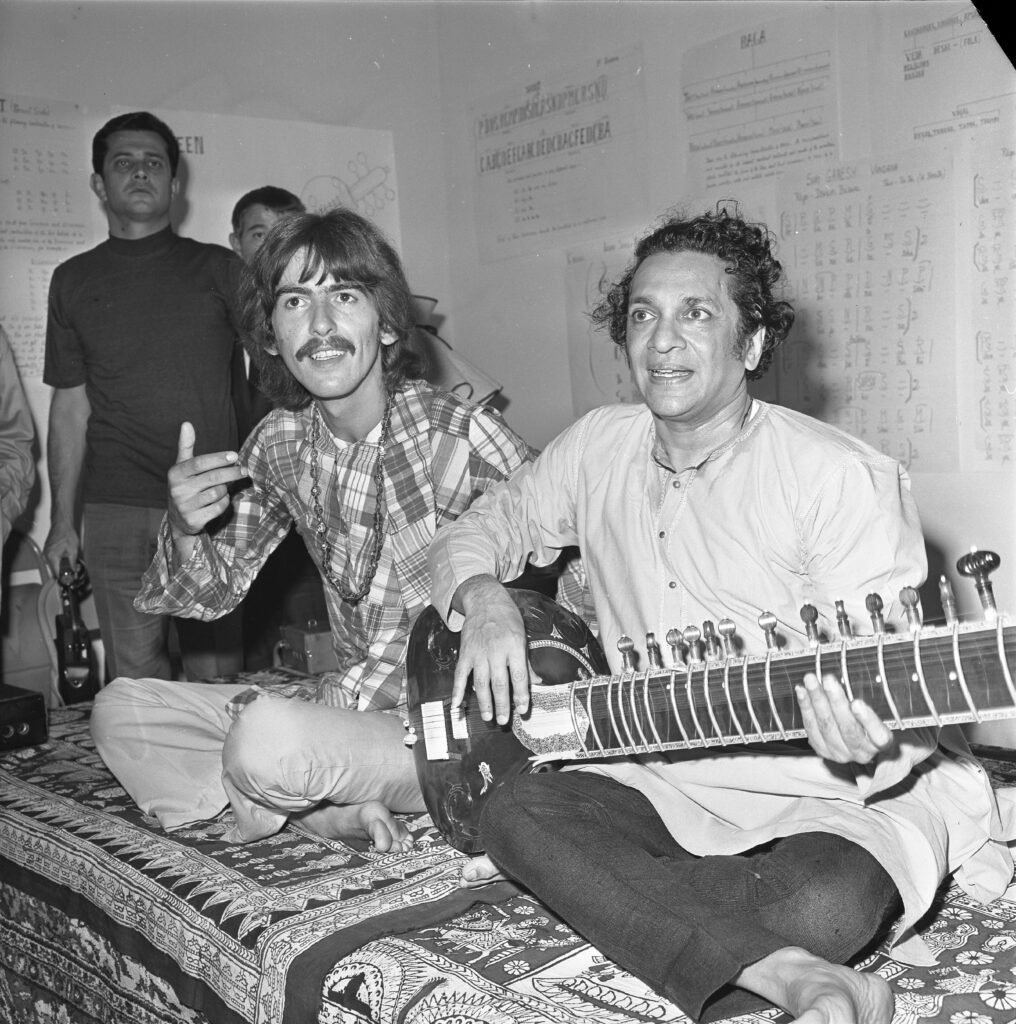
Ravi Shankar’s American fame reshaped global perceptions of Indian music, but it also exposed the frailties of cultural translation. As the sitar slipped into the orbit of psychedelia and oriental mythmaking, Shankar found himself confronting a widening gap between intention and reception. What does this encounter reveal about art’s vulnerability in global circuits?
Ravi Shankar’s American story is often narrated as a tale of triumph alone: a trailblazing sitarist whose charisma, virtuosity, experimental propensity, and collaborative imagination opened the doors of Hindustani music to international audiences. Yet a more neglected contour, submerged beneath this undeniable glow of cultural exchange, points to Shankar’s profound disillusionment with America. In Howard Worth’s biopic Rāga (1971), Shankar’s voice trembled as his silhouette recedes into the dying light on a California beach: “Sometimes, I wonder if I tried to do too much; if I took a false road in America… if all this terrible distortion could have been avoided.” This is not the crisis of a failure but the reckoning of an artist who had witnessed his music becoming deracinated from its aesthetic and cultural moorings.