Vladimir Putin’s return to New Delhi in December 2025 was closely watched for signs of strategic realignment amid the war in Ukraine and growing Western scrutiny of India’s foreign policy priorities. Rather than headline-making breakthroughs, the visit underscored reassurance and continuity. This explainer unpacks the summit’s main outcomes, the pressures shaping the talks, and what they reveal about the future trajectory of India–Russia relations.
Russian President Vladimir Putin’s 4-5 December 2025 visit to India to attend the 23rd India-Russia Annual Bilateral Summit occurred at a moment of unusual strain in the international system. As the war in Ukraine reshapes global alignments and New Delhi faces intensifying Western pressure, the visit offered a window into how both nations are recalibrating a long-standing partnership. Rather than announcing dramatic deals, the summit focused on continuity and reassurance, underscoring the resilience of ties amid external constraints.
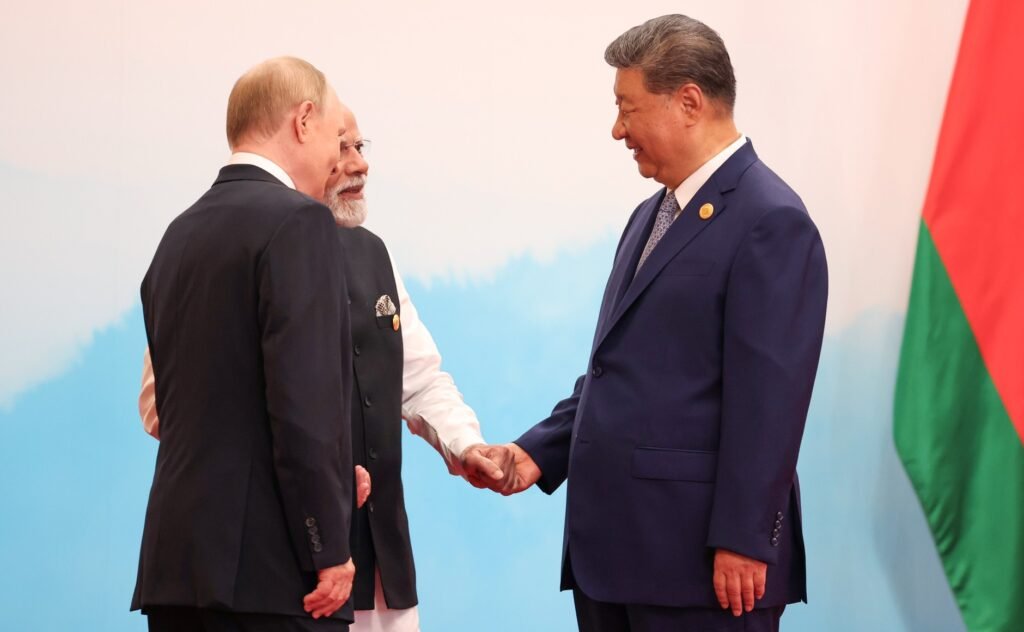
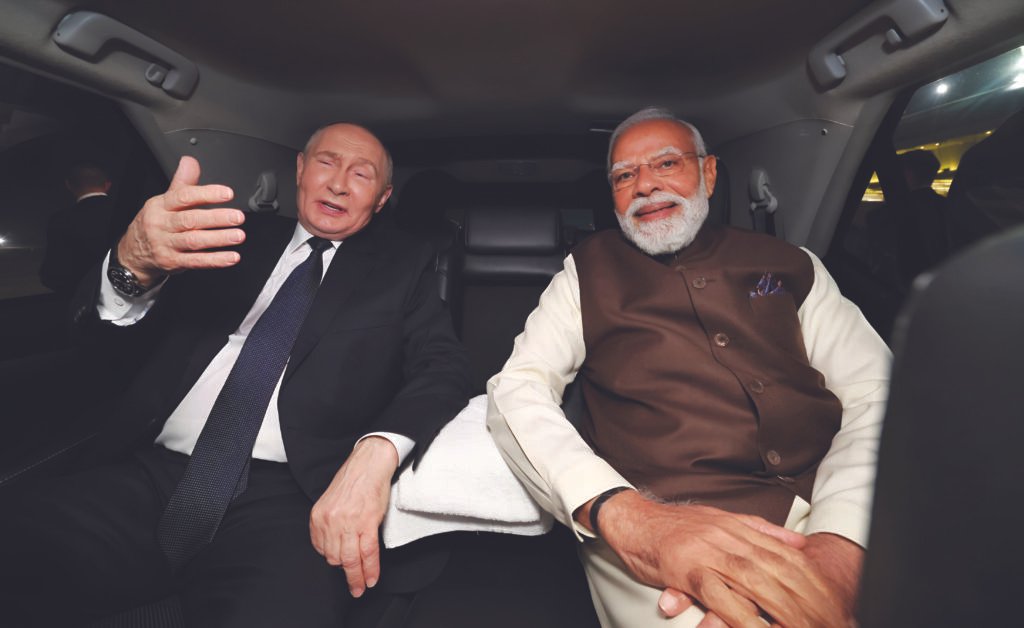
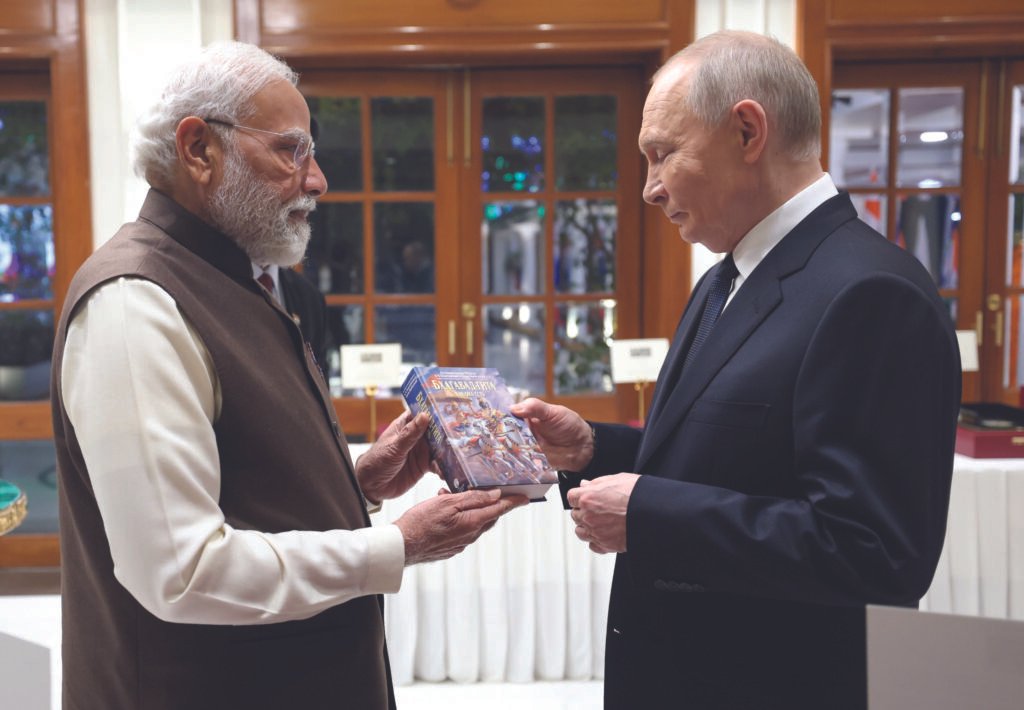
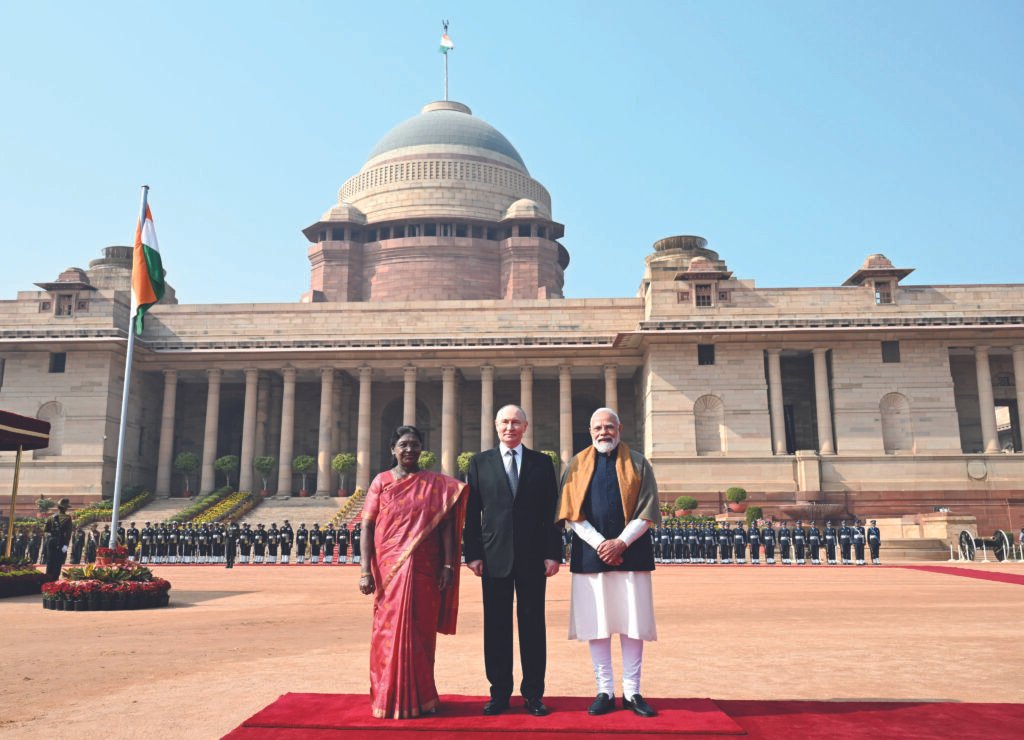
The two-day visit, marking the 25th anniversary of the Delhi Declaration of 2000, was held in New Delhi, with key events at Hyderabad House, including the bilateral summit and business forum, and state banquets at Rashtrapati Bhavan. During the summit, both leaders reiterated the “Special and Privileged Strategic Partnership” established in 2010. Prime Minister Modi stressed that India-Russia ties remain a “guiding star” of India’s foreign policy, built on “mutual respect and deep trust” that has “stood the test of time”. President Putin, highlighting the civilisational dimension of the relationship, observed that “our people have been sincerely interested in each other’s tradition, history and spiritual values for centuries.”
What were the Main Takeaways from the Summit?
The principal takeaway from the summit was consolidation rather than expansion. While the discussions spanned defence, energy, space, and education, the economic dimension figured most prominently. Central to the talks was the Programme for the Development of Strategic Areas of India-Russia Economic Cooperation till 2030, launched during PM Modi’s visit to Moscow last year.
Official data shows bilateral trade reached $68.7 billion last fiscal year, but the composition remains sharply uneven: Russian exports to India, driven largely by crude oil, accounted for $63.84 billion, while Indian exports stood at just $4.88 billion. Despite this, both leaders set a target of $100 billion in bilateral trade by 2030.
“Russia is a reliable supplier of energy resources and everything India needs for developing its energy sector.” President Putin
Acknowledging this imbalance, President Putin noted in an interview that “the disparity must be addressed by finding areas beneficial for both sides,” adding that his “direct instruction to the government of Russia was to look for what else we could purchase from India.”
The leaders agreed to continue jointly developing bilateral settlement systems in national currencies and accelerate negotiations for a Free Trade Agreement between India and the Eurasian Economic Union. The deal is also expected to address the growing disparity in the bilateral trade by giving more market access to Indian goods.
Cooperation in the energy sector remains a major pillar of the partnership. Both countries discussed current and potential cooperation between Indian and Russian companies in the sector and agreed to resolve all related investor concerns. President Putin asserted that “Russia is a reliable supplier of energy resources and everything India needs for developing its energy sector.” Regarding Western pressure on Indian purchase of Russian oil, Putin stated: “Our energy cooperation with India remains unaffected by current conditions, fleeting political swings, or indeed the tragic events in Ukraine.”
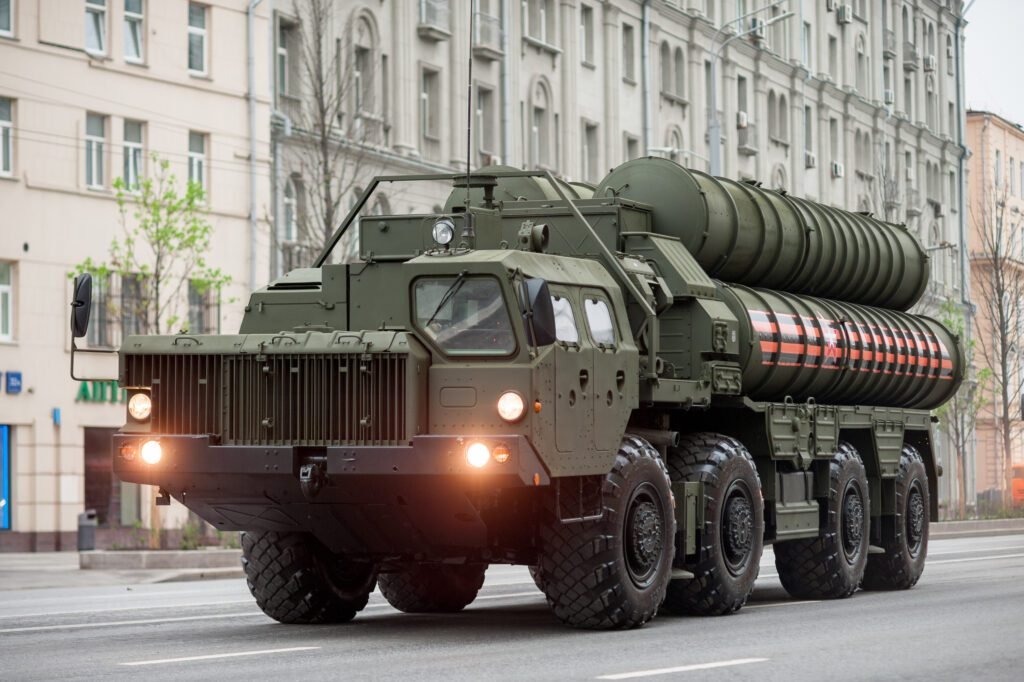
On the defence front, contrary to widespread speculations ahead of the visit, there were no major announcements. It remains unclear whether discussions covered the procurement of additional batteries of the S-400 missile defence system and the S-500 missile system, both of which had been anticipated. Nevertheless, describing military and military-technical cooperation as a pillar of India-Russia partnership, both sides reaffirmed their commitment to maintain the momentum of joint military cooperation activities and expand military delegation exchanges. Putin underscored this continuity, noting that “Russia and India have traditionally worked closely together in the military-technical sphere. Our country has been assisting the modernisation of the Indian army, including air defence, air force, and navy, for over 50 years.” Aligning with India’s ‘Make in India’ priorities, both sides agreed to encourage joint manufacturing in India of spare parts and components for Russian-origin equipment through technology transfer and joint ventures.
“The United States itself still buys nuclear fuel from us for its own nuclear power plants. That is also fuel, uranium, for the reactors operating in the United States. If the US has the right to buy our fuel, why shouldn’t India have the same privilege?” President Putin
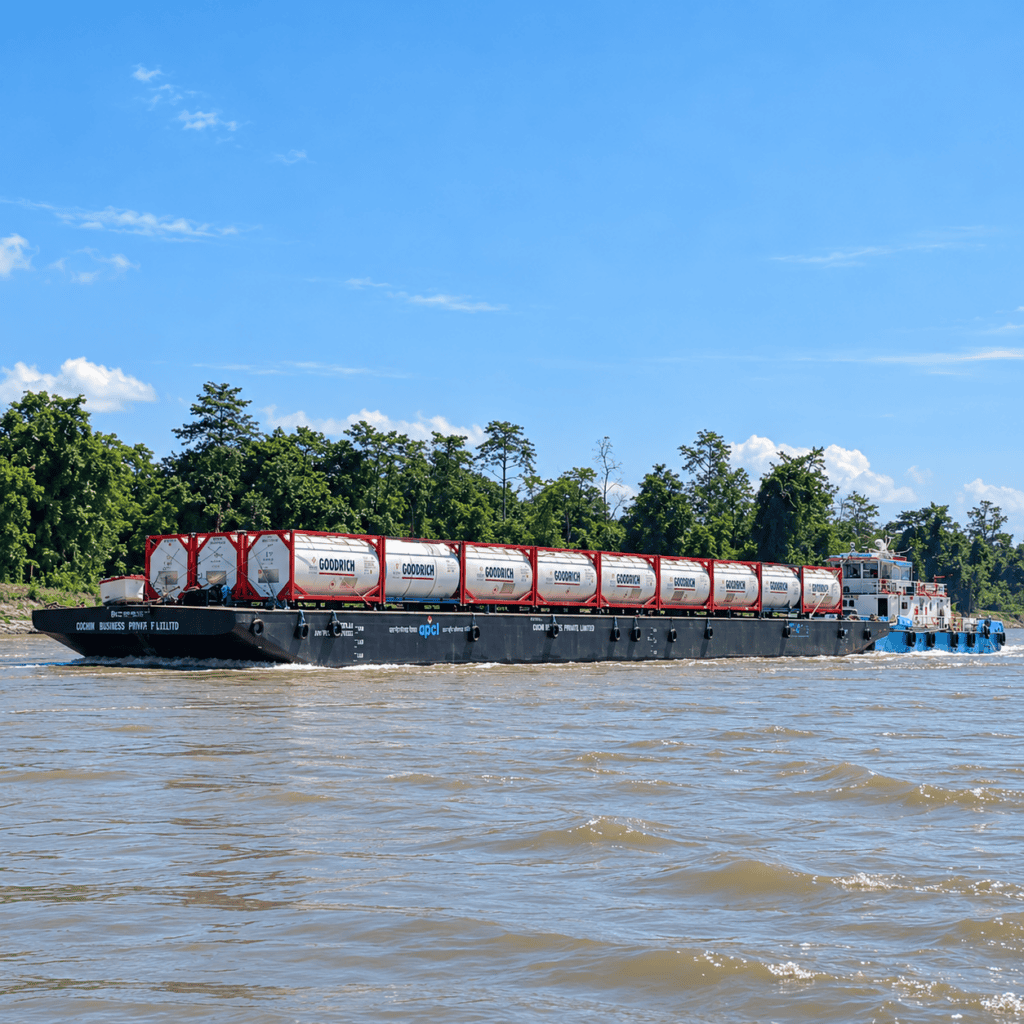
Regarding supply chains and connectivity, leaders agreed to accelerate discussions on the International North-South Transport Corridor (INSTC) and the Vladivostok-Chennai Maritime Corridor. For Russia, these corridors are particularly significant to its effort to reorient trade away from Europe toward Asia and Africa. Cooperation between the railways also featured in such discussions, with an emphasis on beneficial technology exchanges.
On nuclear energy, both leaders agreed to enhance cooperation and discussed the possibility of building a new nuclear power plant. Russia reiterated its commitment to completing the remaining units at the Kudamkulam Nuclear Power Plant on schedule. While no formal announcement was made, President Putin noted that building small modular reactors and floating nuclear power plants could also be relevant for India, just as using nuclear technology for non-energy purposes, such as in healthcare and agriculture.
Another theme featured prominently was skilled labour mobility. Describing India as the emerging “skill capital of the world,” Prime Minister Modi suggested that India could create a “Russia-ready workforce” aligned with Moscow’s demographic and economic priorities. Both sides also expressed interest in strengthening partnerships between educational institutions and enhancing academic mobility through joint programmes, research projects, and other exchanges.
What were the Major Agreements and Initiatives Finalised During the Summit?
The summit resulted in 16 intergovernmental agreements and 15 Memoranda of Understanding (MoU), reflecting institutional depth and long-term cooperation over symbolic breakthroughs.
Key agreements included:
- Labour and Migration: Agreements on ‘Temporary Labour Activity’ and ‘Cooperation in Combating Irregular Migration’.
- Healthcare: A partnership between the respective Ministries of Health focusing on medical education and science.
- Maritime: MoUs on training specialists for polar waters and joint mineral exploration.
- Media: Prasar Bharati signed MoUs with several Russian entities, including Gazprom-media Holding, National Media Group, BIG ASIA Media Group, ANO TV-Novosti and TV BRICS.
- Industry: A significant MoU between M/s. JSC UralChem and major Indian fertiliser firms (RCF, NFL, and Indian Potash Limited).
How did the Ukraine War and Trump’s Warning Shape the Talks?
The shadow of the Ukraine war loomed over the summit, especially due to the ongoing US-led negotiations and peace proposals. It became more intense in the days preceding the summit, following a diplomatic clash through The Times of India articles. In the first article, British High Commissioner Lindy Camero, German Ambassador Philipp Ackermann, and French Ambassador Thierry Mathou accused Russia of escalating the war in Ukraine even as peace talks were underway. In response, the Russian Ambassador argued that Moscow never sought this war and accused European diplomats of misleading the Indian public about the origins and contexts of the crisis.
Prime Minister Modi reiterated India’s long-standing position, stating that “India is not neutral, it stands on the side of peace,” while also thanking President Putin for keeping India informed about developments in the conflict. Earlier, responding to a question on Western pressure on India, Putin remarked that “India is a major global player, not a British colony, and everyone must accept this reality.”
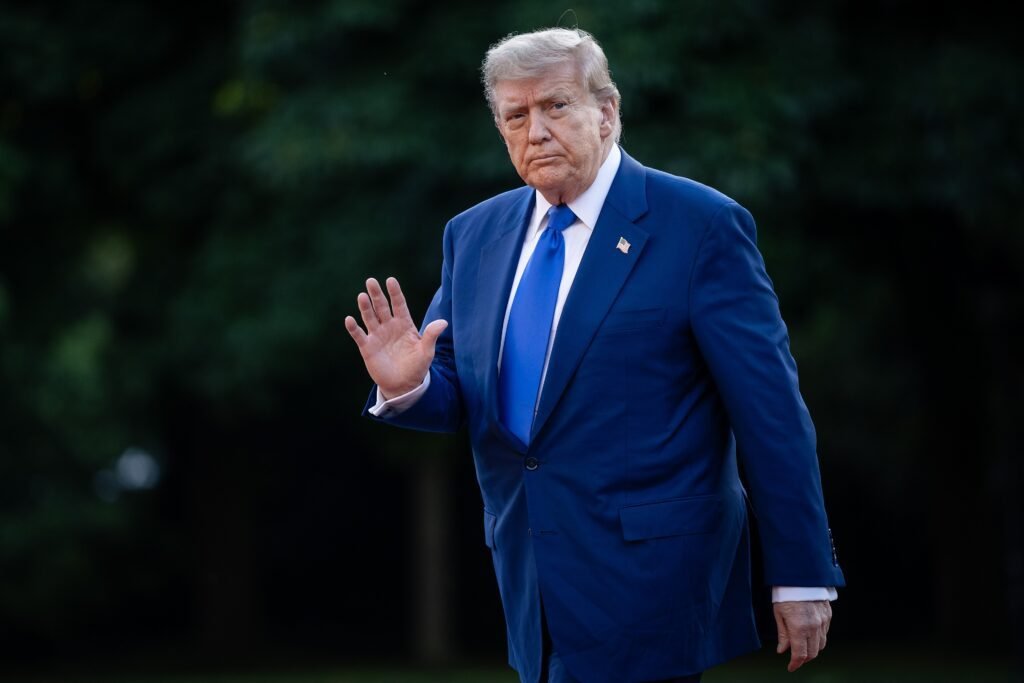
The talks were further shaped by remarks from US President Donald Trump, who accused India of funding Russia’s war by purchasing Russian oil. Responding to these comments before departing for India, Putin observed that “President Trump has his own agenda, his own goals. Whereas we focus on ours, not against anyone, but rather aimed at safeguarding our respective interests. In our dealings, we cause no harm to others, and I believe that leaders from other countries should appreciate this.” He also noted that “The United States itself still buys nuclear fuel from us for its own nuclear power plants. That is also fuel, uranium, for the reactors operating in the United States. If the US has the right to buy our fuel, why shouldn’t India have the same privilege?”
While it remains difficult to assess the precise impact of these pressures on India’s policy, the absence of major new defence or technology-sharing announcements suggests a cautious approach.
What Lies Ahead for India-Russia Relations?
Looking ahead, India-Russia relations are likely to remain stable but increasingly bound by structural and geopolitical constraints. Some observers argue that the summit, held under Western pressure, exposed limitations of both countries, despite efforts to project confidence. They assert that Russia can’t offer any help to India in its most important challenge, China, and remind about the Soviet Union’s approach during the 1962 India-China war.
Western reactions to the visit were marked by unease. Western media and officials reiterated calls for India to use its influence with Putin to press for peace in Ukraine. German Ambassador Philipp Ackermann said he would follow the visit closely and hoped Prime Minister Modi would remind Putin that “this is not an era of war.”
For India, however, the broader trajectory remains clear. Strategic autonomy is non-negotiable. While New Delhi may adjust tactics in response to external pressure, it is unlikely to abandon a relationship that continues to serve concrete economic and security interests. At the same time, India will continue to hedge by deepening ties with the United States, Europe, and other partners, wary of overdependence on any single power. Recent Western trade measures and tariff policies have only reinforced India’s reluctance to place uncritical trust in the West.
Putin’s 2025 visit did not alter the fundamentals of India–Russia relations, but it clarified their contours. The partnership remains durable, but no longer unconstrained; strategically relevant, but no longer central to India’s global orientation.