The Cold War was at its height in the early 1960s, and a post-colonial Africa was trying to navigate this turbulent geopolitical landscape. When the newly independent Congo saw the assassination of its first democratically elected Prime Minister, Patrice Lumumba, it revealed the fragility of newly formed states’ independence. Western powers moved in to secure their influence over Congo’s mineral resources, particularly its uranium deposits, while the country also became an example of anti-colonial solidarity. As newly independent African nations began gaining representation in the UN, the attention turned to the very meaning of sovereignty in a post-colonial world.
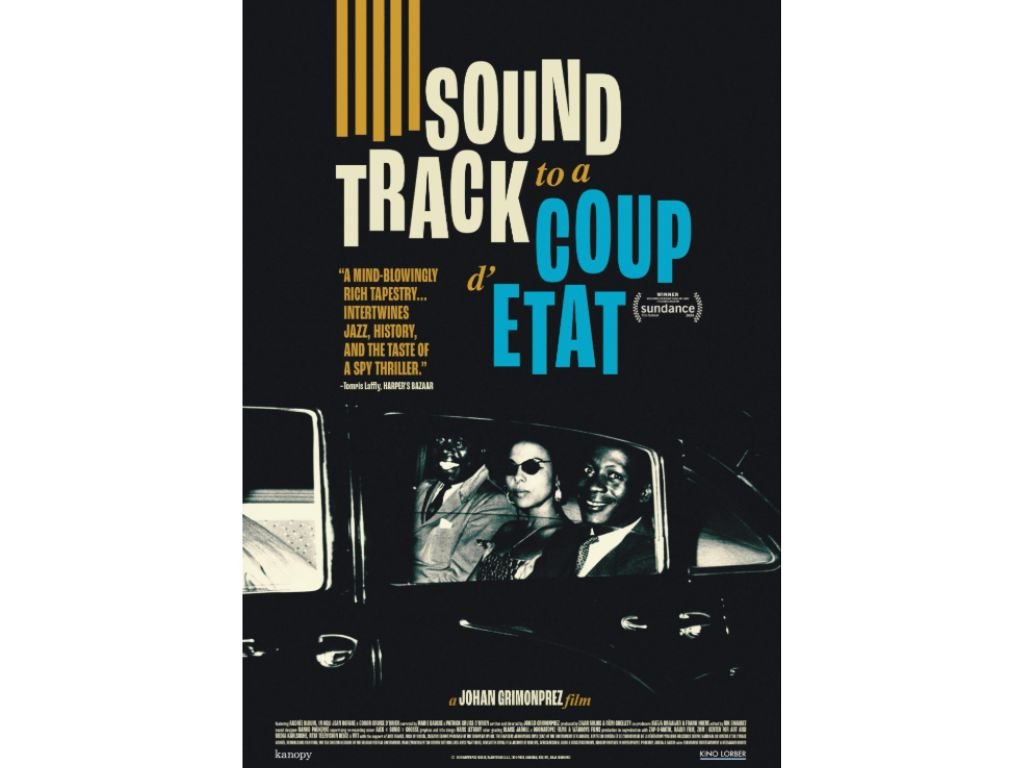
The documentary, Soundtrack to a Coup d’Etat, by Johan Grimonprez, addresses this intersection of Cold War politics, African decolonisation, and cultural diplomacy. The film focuses on the February 1961 protests at the United Nations Security Council, when jazz musicians Abbey Lincoln and Max Roach confronted UN diplomats to condemn the assassination of Lumumba. This was followed by U.S. jazz musicians such as Louis Armstrong, Nina Simone, Duke Ellington, and Dizzy Gillespie being sent on a tour of the African nations as part of a cultural diplomacy program to promote American goodwill abroad, while the musicians were themselves faced with the dilemma of representing a country where segregation laws still persisted. Using archival footage and testimony of figures like Andrée Blouin, who organised women in the Congo, and the writer In Koli Jean Bofane, who witnessed these events first-hand, the film paints a vivid picture of the period. Moreover, speeches of leaders like Nikita Khrushchev to Dwight Eisenhower and Malcolm X, paired with jazz music, created a rich and rhythmic narrative of their own.
Soundtrack to a Coup d’Etat made its debut at the 2024 Sundance Film Festival, receiving the André Cavens Award for best film, and was nominated for Best Documentary Feature at the 97th Academy Awards. It’s a must-watch not only for its historical content but also for its ability to show how ordinary people navigate extraordinary political circumstances, with resilience, solidarity, and the power of human connection.