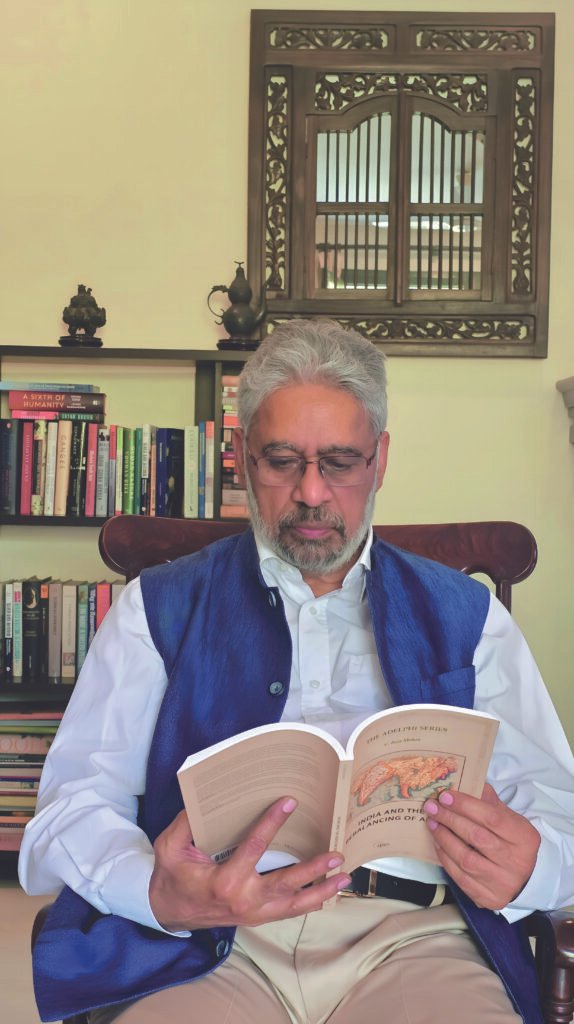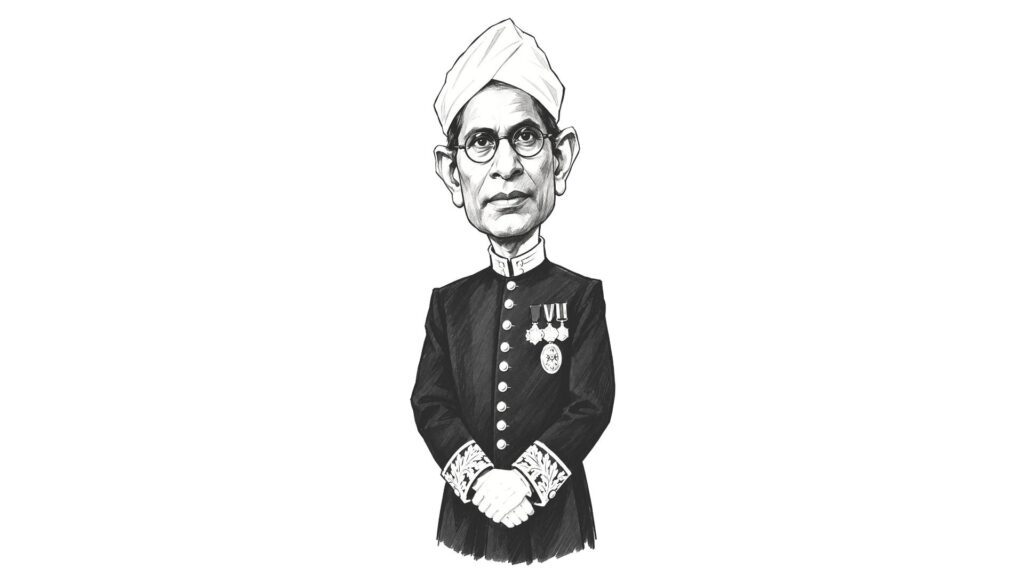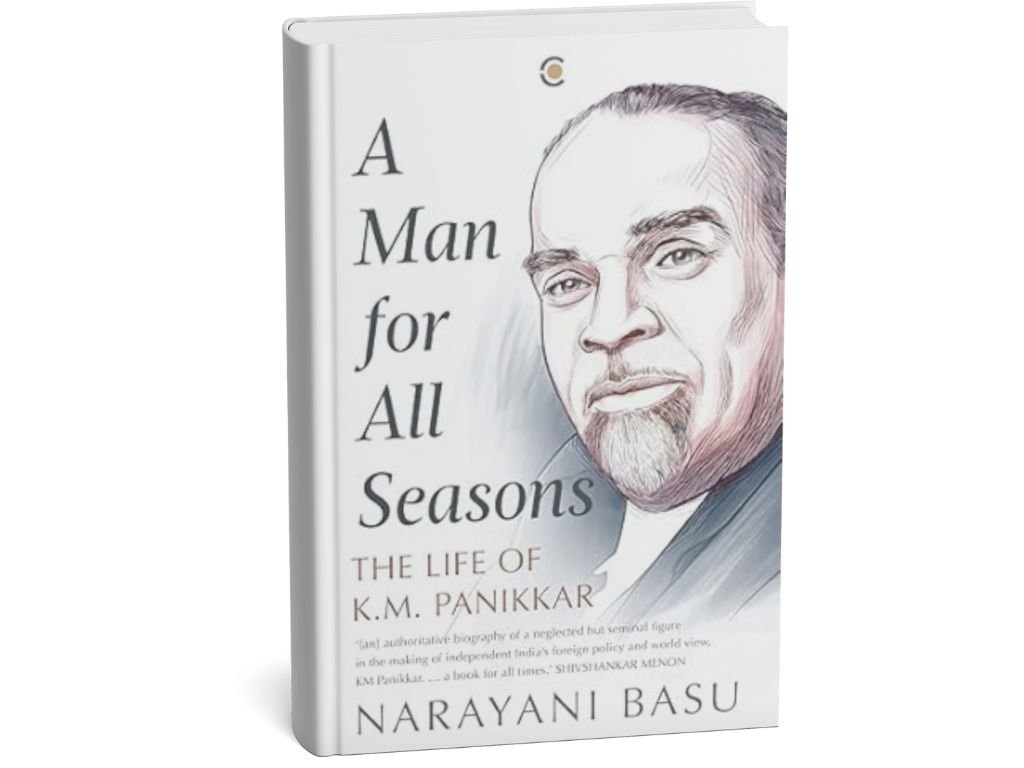
One thing that immediately stands out in Narayani Basu’s account of Sardar Panikkar is the vast intellectual seascape of India’s first generation of thinkers. Writers like Pannikar navigated treacherous waters with remarkable gumption. From diving into Malayalam high poetry to exacting constitutional debates, Panikkar moved with natural ease.
Apart from brimming with details of Panikkar’s personal and professional life, Basu’s doorstopper-of-a-book also partly narrates the constitutional history of princely India. While the subject matter occasionally turns a tad dry, it is enlivened by burlesque stories teeming with the eccentricities and shrewdness of various maharajas. As the British position in India grew tenuous, many figures in royal India noisily clung to an illusion of permanence as the dawn of independence approached. The ground beneath their feet gradually shifted, and Panikkar finds himself at the heart of this crumbling order.
Turning to geopolitics, Basu carefully documents that Panikkar was an early champion of the ‘Greater India’ school of thought. Since his halcyon days at Oxford, Panikkar grew fascinated by ideas of Hindu revivalism. He saw Southeast Asia as a natural arena for Indian cultural and strategic influence. His exposure to charismatic figures of Southeast Asian political thought in Europe further connected him to a broader world of underground revolutionaries who passionately thought about Asia’s future. As Basu notes, Panikkar’s lifelong attachment to ideas of Hindu regeneration did not spill into vicious sectarianism. For him, being Hindu symbolised the innate pluralism of the Indian subcontinent.
In the same spirit, Panikkar wrote prolifically about India’s centrality in the Indian Ocean. His basic idea was that the seas were as crucial as land frontiers, if not more, for India’s security. Delhi’s security arc stretched from the Gulf of Aden to the Straits of Malacca. All the East India companies, regardless of nationality, had sailed these waters to reach Asia. Garrotting the lanes of oceanic commerce was the first step towards consolidating power on land.
In independent India, Panikkar was among the fortunate few who managed to satisfy both his eclectic literary ambitions and his desire for public service, serving as India’s top diplomat in Peking, Cairo and Paris. Basu also recounts how Panikkar’s missteps in China taught him lessons in statecraft that academia alone could never impart. After China, he shed his earlier habit of deferentially echoing views that his superiors wanted to hear. What stays with the reader is the image of Panikkar—scholar, poet, writer, constitutional expert, editor, and politician—navigating life’s uncertainties through the act of writing. His books were a steady outpouring of solitude rendered in words. As Basu writes, “His had been a restless life, from Tranvancore to England, from Bhopal to Patiala to Bikaner, from China to Egypt and from Syria to Paris.” Whatever the uncertainty, Panikkar’s method was simple: “Once reading and writing are ruled out, what is left for a man like me?”